
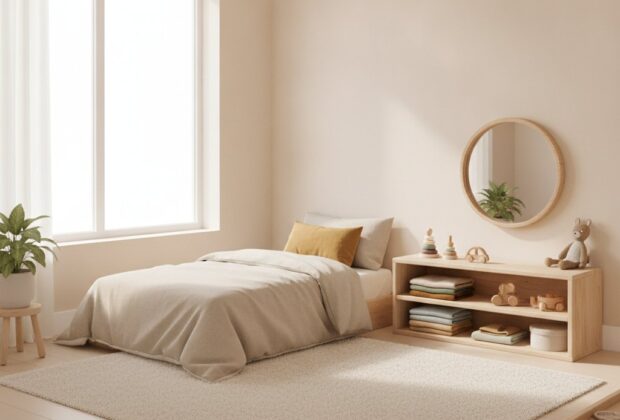
A child's bedroom is far more than a place to sleep—it's one of the most powerful environments for building independence in early childhood. A thoughtfully designed Montessori toddler bedroom allows a young child to get in and out of bed on their own, choose their own clothes, and move freely without constant adult intervention. This guide walks through every element of the setup, from floor beds to rotating toy displays, so you can create a space that truly supports your toddler's growing autonomy.
This article builds on the principles outlined in our full guide to Montessori at home, applying them specifically to the bedroom—one of the first spaces where independence takes root.
Why Bedroom Design Matters in the Montessori Approach
In traditional nurseries, cribs, high furniture, and closed toy bins are designed around adult convenience. The Montessori philosophy flips this model: the room is designed around the child's abilities and developmental needs. Every element—from the height of a shelf to the placement of a mirror—is intended to invite the toddler to act independently rather than wait for help.
When a child can access their own bed, clothes, and books without assistance, they develop confidence, decision-making skills, and a genuine sense of ownership over their space. This is the foundation of the Montessori bedroom.
The Floor Bed: Foundation of Independent Sleep
The floor bed is perhaps the most recognizable feature of a Montessori toddler bedroom. Instead of a crib with raised sides, the child sleeps on a low mattress placed directly on the floor or on a simple low frame.
- Freedom of movement: The child can get into and out of bed independently, whether for sleep or for waking up and starting their day.
- Safety over restriction: Rather than containing the child with bars, the entire room is made safe so exploration is never a hazard.
- Sizing considerations: A twin-size mattress works well as children grow, avoiding the need for multiple bed transitions later.
To make the floor bed safe and inviting, secure any furniture that could tip, cover electrical outlets, and remove long cords or blinds strings from reach. A soft rug beside the bed can cushion any tumbles as your toddler learns to climb in and out.
Transitioning from a Crib
If your child is currently in a crib, transition gradually. Start with naps on the floor bed while keeping the crib available at night, then move fully once your toddler seems comfortable navigating the new setup. Expect an adjustment period—some toddlers will get up frequently at first, which is a normal part of learning the new freedom.
Low, Open Shelving for Accessible Belongings
Closed dressers and high closets require adult help every time a toddler needs something. Low, open shelving changes this dynamic entirely by putting clothing, books, and toys within the child's own reach.
- Clothing shelves: Instead of a tall dresser, use a low shelf or small cubbies where a limited selection of weather-appropriate outfits are folded and visible.
- Book display: A front-facing bookshelf showing covers (rather than spines) helps toddlers select books independently and encourages a love of reading.
- Personal items: A small basket for a hairbrush, a hook for a jacket, and a step stool for reaching a sink all reinforce self-care skills.
Keep everything at or below the child's eye level. If a shelf feels too tall even for a toddler standing on tiptoe, it belongs to the adult zone, not the child's.
Dressing Independence Starts Here
A dedicated, accessible clothing area is one of the most practical outcomes of this shelving approach. When two or three simple outfit choices are laid out on a low shelf, toddlers can select and dress themselves, building fine motor skills and decision-making confidence. This mirrors the same independence-building philosophy applied to mealtime routines, as discussed in our piece on the Montessori kitchen and teaching kids independence.
Mirror Placement and Purpose
A low, securely mounted mirror is a signature feature of Montessori infant and toddler rooms. Positioned at floor level near the play area or floor bed, it serves several purposes:
- Self-recognition: Infants and young toddlers benefit from observing their own movements and expressions.
- Body awareness: As children grow, the mirror supports dressing routines, letting them check their own appearance.
- Safety: Choose an acrylic or shatterproof mirror, and secure it firmly to the wall to prevent tipping.
A horizontal bar or low railing installed beside the mirror at floor-bed height can also help toddlers pull themselves up safely as they develop new motor skills.
Rotating Toy Displays: Less Is More
One of the more counterintuitive Montessori principles is that fewer toys, displayed thoughtfully, lead to deeper engagement than an overflowing toy box. A rotating toy display supports focus, decision-making, and respect for materials.
- Open shelving display: Arrange four to six toys or activities on a low shelf, each with its own designated spot.
- Rotation schedule: Every one to two weeks, swap out toys based on your toddler's interests and developmental stage, storing the rest out of sight.
- Trays and baskets: Use trays or small baskets to define each activity, helping toddlers understand that materials have a "home" they return to after use.
This minimalist approach reduces decision fatigue, encourages longer periods of independent play, and keeps the bedroom feeling calm rather than cluttered.
Safety Considerations for a Freely Accessible Room
Because a Montessori toddler bedroom is designed for unsupervised exploration—especially right after waking—safety must be built into every corner of the room.
- Furniture anchoring: Secure all shelves, mirrors, and dressers to the wall with anti-tip straps.
- Soft flooring: A low-pile rug or padded mat near the bed cushions any falls during the transition to independent sleep.
- Outlet and cord safety: Cover outlets and secure blind or curtain cords well out of reach.
- Door safety: Consider a doorknob cover or gate if you're not ready for your toddler to roam the house freely after waking.
- Lighting: A dim, child-operable lamp or nightlight allows toddlers to see their surroundings without needing to call for help in the dark.
Every safety measure should aim to expand freedom, not restrict it—the goal is a room where a toddler can explore confidently, with hazards removed rather than access blocked.
Embracing Minimalism in Room Design
Montessori spaces favor calm, uncluttered aesthetics over stimulating, toy-filled environments. Neutral wall colors, natural materials like wood and cotton, and limited decor help toddlers focus on their activities rather than being overwhelmed by visual noise.
This doesn't mean the room needs to be bare or sterile. A few carefully chosen elements—a piece of child-level artwork, a small plant, a woven basket—add warmth without contributing to clutter. The key question when adding anything to the room is whether it serves the child's independence and calm, or whether it exists purely for adult decorative preference.
Establishing Independent Sleep and Morning Routines
The ultimate goal of this bedroom setup is to support two major routines: falling asleep independently and starting the day with self-directed activity. A well-designed room makes both possible.
- Bedtime routine: A consistent sequence—bath, book, bed—paired with the floor bed's accessibility, helps toddlers feel secure and settle into sleep without being lifted into a crib.
- Morning routine: Upon waking, a toddler can get out of bed, choose a book from the shelf, or select a pre-approved toy, reducing the need for immediate parental intervention.
- Dressing routine: With outfits visible and accessible on low shelves, toddlers can begin practicing dressing themselves each morning.
These small daily practices compound over time, building a toddler's sense of competence and reducing morning stress for the whole family.
Bringing It All Together
A Montessori toddler bedroom isn't about following a rigid checklist—it's about observing your child's abilities and adjusting the environment to meet them. Start with the floor bed and basic safety measures, then gradually introduce low shelving, a mirror, and a rotating toy display as your toddler shows readiness for more independence. Over time, this space becomes not just a bedroom, but a daily training ground for confidence, self-reliance, and calm decision-making that extends well beyond the four walls of the room.