
What Montessori at Home Really Means
Montessori at home is not about buying a specific set of toys or replicating a classroom in your living room. It is a philosophy of respect: respect for the child's pace, their capacity to learn through movement and repetition, and their deep desire to do things for themselves. Dr. Maria Montessori observed that children pass through sensitive periods when they are biologically primed to absorb certain skills, and that an environment tailored to their size, ability, and interests allows this natural development to unfold with minimal adult interference.
At its core, applying Montessori principles at home means shifting your role from "doer" to "guide." Instead of dressing your toddler, you set up a low hook and simple clothing so they can dress themselves. Instead of carrying every plate to the table, you provide a step stool and child-sized dishes so they can help. This guide walks through the philosophy, the room-by-room setup, and the age-appropriate milestones that make independence possible, with pointers to deeper resources on specific rooms along the way.
The Core Principles Behind a Montessori Home
Freedom Within Limits
Children thrive when they have real choices within a safe, clearly defined structure. This might mean two acceptable outfits laid out instead of an entire closet, or a shelf of five activities instead of an overflowing toy bin. Limiting options reduces overwhelm and helps children make decisions confidently.
Order and Predictability
Young children are drawn to order; it helps them make sense of the world. A home that supports Montessori development keeps items in consistent, labeled places, following simple routines that repeat daily so the child can anticipate what comes next and eventually manage transitions independently.
Child-Sized Everything
Furniture and tools scaled to a child's actual height and strength are central to the method. When a chair, sink, or shelf fits the child rather than the adult, they can act without needing to ask for help, which is the foundation of true independence.
Beauty and Simplicity
Montessori environments favor natural materials, muted colors, and uncluttered surfaces over plastic, primary-colored toys. This is not aesthetic snobbery; a calm visual environment helps children concentrate and treat their belongings with care.
Getting Started: A Room-by-Room Approach
Rather than overhauling your entire home at once, most families find success by tackling one room at a time, starting with the spaces where independence matters most in daily life: the bedroom, the kitchen, and shared living areas.
The Bedroom
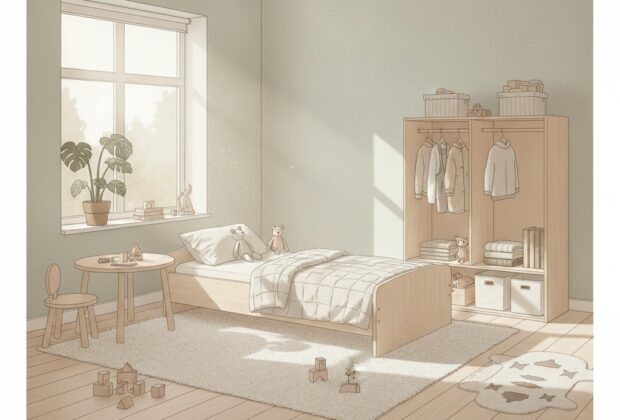
A child's bedroom is often the first space parents transform, since sleep and dressing routines offer immediate opportunities for autonomy. A floor bed or low platform bed allows a child to get in and out without assistance, while an open, low wardrobe lets them choose and put away their own clothes. For a detailed walkthrough of layout, furniture choices, and safety considerations specific to toddlers, our guide to Montessori bedroom setup for toddlers covers this in depth.
The Kitchen
The kitchen is where independence and family connection intersect most naturally. A learning tower or step stool brings a child up to counter height, child-sized utensils make food prep manageable, and a low drawer of dishes lets them set the table. These small adjustments transform mealtime from something done for the child into something done with the child. Our dedicated piece on Montessori kitchen setups explores specific tools, snack stations, and age-appropriate kitchen tasks in more detail.
The Living Room and Shared Spaces
Shared spaces should include at least one low shelf or basket where the child's own books and activities live, separate from adult décor. A small table and chair sized for the child gives them a dedicated place to work on puzzles, drawing, or independent play, reinforcing that the whole home, not just their bedroom, belongs to them too.
The Bathroom
A step stool at the sink, a low hook for a towel, and a small stack of hand towels within reach allow children to wash their hands and brush their teeth independently. For toilet learning, a child-sized toilet seat insert or a floor potty placed in the bathroom, rather than tucked away, normalizes the process as part of daily routine.
Choosing Montessori-Aligned Furniture and Materials
When furnishing a Montessori-inspired space, prioritize function and scale over branding. Look for:
- Low, open shelving instead of toy boxes, so every item is visible and easy to return to its place.
- Natural materials like wood, cotton, and wool, which offer richer sensory feedback than plastic.
- Real, functional tools scaled down in size, such as child-safe knives or actual glassware, rather than pretend versions.
- Mirrors mounted low to support self-awareness and, in infancy, visual development during floor time.
- Limited quantity of toys and materials displayed at once, rotating items periodically to maintain novelty and focus.
Resist the urge to buy an entire curated Montessori shelf set at once. Start with a handful of activities that match your child's current interests and skill level, observe how they engage, and adjust from there.
Age-Appropriate Expectations for Independence
Infants (0–12 months)
At this stage, independence looks like freedom of movement. A floor bed instead of a crib, an open floor mat instead of a container-based play environment, and a low mirror all invite infants to move, reach, and explore at their own initiative rather than being placed into positions or containers by adults.
Toddlers (1–3 years)
This is the age most associated with Montessori independence: self-dressing, self-feeding, toileting, and simple food prep. Provide accessible clothing storage, a step stool wherever height is a barrier, and consistent daily routines like a visual schedule or simple sequence they can follow largely on their own.
Preschoolers (3–6 years)
Preschool-aged children can take on more complex practical life tasks: setting the whole table, watering plants, folding laundry, and helping with real cooking tasks like spreading or cutting soft foods. This is also the age to introduce more structured shelf work, including sorting, pouring, and early literacy or math materials, alongside greater responsibility for tidying their own spaces.
Building Daily Routines That Reinforce Independence
Environment alone is not enough; routines give the space purpose. Establish a consistent order for mornings, meals, and bedtime, and resist the temptation to intervene immediately when a child struggles with a task. Narrate steps rather than performing them, and allow extra time in the schedule so children are not rushed out of the chance to do things themselves. Visual routine cards or simple picture schedules posted at child height can reinforce sequence and reduce the need for verbal reminders.
Involve children in real household contributions, watering plants, wiping spills, feeding pets, rather than manufactured chores. These tasks connect the home environment to a genuine sense of contribution and competence, which is the deeper goal behind every shelf, hook, and step stool in a Montessori-inspired home.
Common Mistakes to Avoid
- Overloading shelves: Too many options overwhelm young children and discourage focused engagement.
- Buying instead of observing: Materials should follow your child's demonstrated interests, not the other way around.
- Stepping in too quickly: Allowing struggle within reason builds resilience and skill; constant rescuing undermines it.
- Ignoring safety for aesthetics: A beautiful setup still needs secured furniture, safe materials, and age-appropriate supervision.
- Treating it as all-or-nothing: Partial implementation, one shelf, one low hook, one accessible drawer, still meaningfully supports independence.
Bringing It All Together
Montessori at home is a gradual, ongoing process rather than a single weekend project. Start with observation: watch what your child is drawn to and where they get frustrated by inaccessible tools or overly complex environments. From there, adjust one room at a time, beginning with the bedroom and kitchen, where daily independence has the most immediate impact, and expand outward as your child's skills grow. With patience and consistency, a thoughtfully designed home becomes one of the most powerful tools you have for nurturing a confident, capable, self-directed child.