
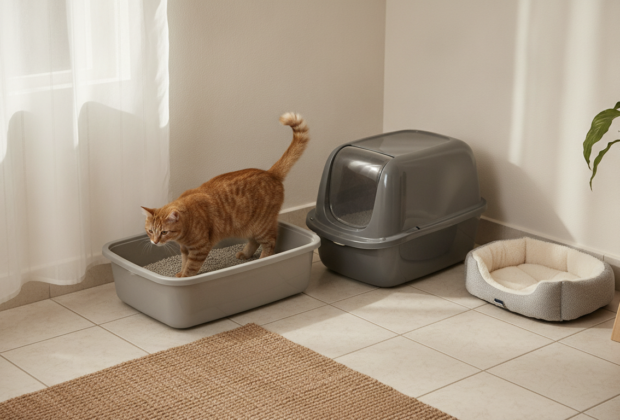
When you're managing litter boxes for a multi-cat household, the covered vs open debate takes on a whole new dimension. It's not just about odor control or aesthetics anymore — it's about safety, social dynamics, and giving every cat in your home a fair chance to do their business without fear. In homes with multiple cats, the wrong box style can turn a simple bathroom trip into a stressful ambush scenario.
This article dives deep into how covered and open litter boxes perform specifically when several cats share a space, and what that means for their behavior, stress levels, and litter box habits.
Why Litter Box Style Matters More With Multiple Cats
A single cat living alone has the luxury of using any box style without much consequence. But add a second, third, or fourth cat to the mix, and suddenly every design choice has ripple effects. Cats are territorial by nature, and the litter box is one of the most vulnerable moments in their day. A covered box that feels cozy to one cat might feel like a trap to another, especially if there's tension in the household hierarchy.
If you haven't already, it's worth reviewing The Complete Guide to Choosing the Right Litter Box Setup for Multi-Cat Households for a broader overview of quantity, placement, and litter type considerations before zeroing in on box style.
The Case for Open Litter Boxes
Open, uncovered litter pans are often the safest default choice for multi-cat homes, and here's why:
- 360-degree visibility: A cat using an open box can see approaching housemates from every angle, reducing the risk of surprise attacks.
- Multiple escape routes: If a more dominant cat approaches, the cat inside the box can bolt in any direction instead of being funneled through a single entry point.
- Better odor dissipation for shared spaces: Open boxes don't trap smells the way covered ones do, which matters when litter is being used more frequently by several cats.
- Lower anxiety for skittish or submissive cats: Cats lower in the household hierarchy often prefer the security of an open layout where they aren't cornered.
The main downside of open boxes is reduced privacy and slightly more visible mess, but in multi-cat contexts, safety and accessibility typically outweigh these cosmetic concerns.
The Case for Covered Litter Boxes
Covered or hooded boxes have real benefits too, particularly for odor containment and privacy-loving cats. Some cats genuinely prefer the enclosed, den-like feeling a hood provides, and it can help contain litter scatter and smell in small apartments.
However, in multi-cat households, covered boxes introduce a significant risk: the ambush effect. A confident or territorial cat can position itself near the single entrance of a hooded box and effectively trap a housemate inside. The cat using the box has no visibility of what's happening outside and only one way out — a setup that can create lasting anxiety and even lead to litter box avoidance.
Top-Entry Boxes: An Even Riskier Choice for Groups
Top-entry litter boxes, where cats climb in and out through an opening on the lid, amplify this problem further. While they're excellent at containing litter and odor, they leave the cat completely vulnerable while entering or exiting, with no line of sight and only one narrow access point. For multi-cat homes with any history of tension, top-entry boxes are generally not recommended.
How Social Hierarchy Should Guide Your Choice
Every multi-cat household has some form of social structure, even if it isn't obvious to humans. Before choosing box styles, observe your cats:
- Identify the confident cats who move freely through the house and often initiate interactions.
- Identify the more cautious or submissive cats who tend to hide, eat separately, or avoid confrontation.
- Watch for guarding behavior near existing litter boxes, food bowls, or doorways — this is a strong sign that a covered box could become a trap zone.
If you notice one cat consistently blocking access to a covered box or lingering nearby when another cat tries to use it, it's a clear signal to switch that box to an open style, or add an open alternative nearby.
Practical Recommendations: Mixing Box Styles
Rather than choosing one style for the entire household, many successful multi-cat setups use a mix:
- Default to open boxes as the majority style, especially in homes with more than two cats or any signs of tension.
- Offer one or two covered options in low-traffic areas for cats who show a clear preference for privacy, but always paired with an open box nearby as backup.
- Avoid top-entry boxes entirely unless you have a single, very confident cat with no housemates showing territorial behavior.
- Reassess as kittens age — younger cats may be fine with covered boxes, but preferences and social dynamics often shift as cats reach social maturity around 2-4 years old.
Remember that box style is only one piece of the puzzle. Placement plays an equally critical role in preventing conflict, which is why it's worth reading our companion guide on Litter Box Placement Strategies to Stop Territorial Fights Between Cats to complete your setup strategy.
Final Thoughts
There's no universal winner in the covered vs open litter box debate — but in multi-cat households, open boxes generally offer the safety, visibility, and escape routes that reduce ambush risk and stress. Covered boxes can still have a place in your setup, but only when paired thoughtfully with open alternatives and placed in a way that respects your cats' unique social dynamics. Watching your cats' behavior closely remains the best guide to what setup will keep the peace.