
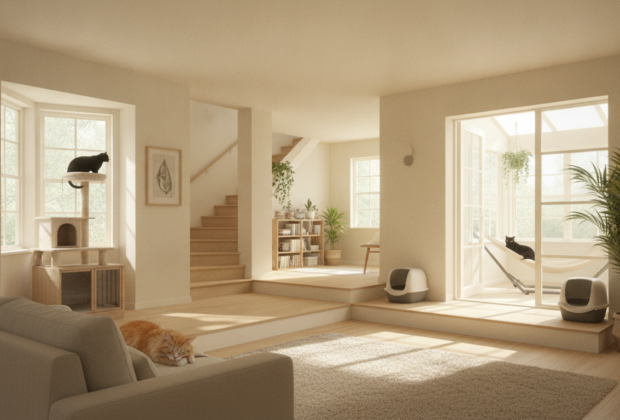
When cats squabble in a multi-cat household, most owners immediately suspect food, toys, or attention as the culprit. But one of the most overlooked triggers of feline tension is something far simpler: where the litter boxes actually sit in your home. Poor placement can turn a routine bathroom break into a stressful ambush, fueling guarding behavior and territorial disputes that escalate over time. This guide breaks down exactly how to position litter boxes to keep the peace.
Why Location Matters More Than You Think
Cats are ambush predators and, at the same time, potential prey to larger animals in the wild. This dual instinct makes them extremely vulnerable while eliminating. A cat squatting in a litter box has limited visibility and a slow escape response, which is why location can make or break feline harmony in a shared home.
When boxes are clustered in one spot or tucked into a single room, one confident or dominant cat can easily control access to all of them simply by lounging nearby. This is called resource guarding, and it's one of the most common hidden causes of litter box avoidance and inappropriate urination in multi-cat homes. If you haven't yet settled on how many boxes and what style you need, our Complete Guide to Choosing the Right Litter Box Setup for Multi-Cat Households covers the foundational ratios and box types before you tackle placement.
The Room-by-Room Placement Framework
Spread Boxes Across Different Levels
In multi-story homes, avoid stacking every litter box on one floor. Cats that spend most of their time upstairs shouldn't have to cross into contested downstairs territory just to relieve themselves. Aim to place at least one box per level, ideally in a quiet corner that isn't a thoroughfare for foot traffic or other pets.
Separate Zones, Not Just Rooms
Placing two boxes in adjoining rooms connected by a single doorway doesn't count as separation in a cat's mind. True zone separation means boxes are far enough apart that a cat guarding one location cannot see or hear another cat approaching a different box. Think of your home in quadrants and try to place boxes in at least two or three distinct zones.
Avoid Dead-End Placements
Never place a litter box in a closet, small bathroom, or narrow hallway corner with only one way in and out. A dead-end setup is a prime location for ambush, and skittish or lower-ranking cats will quickly learn to avoid it altogether. Instead, choose open areas where a cat can see potential threats approaching and has at least two directions to flee if needed.
Multiple Escape Routes Are Non-Negotiable
Even in a spacious room, positioning a box against two walls in a corner with furniture blocking one side can recreate a dead-end effect. Whenever possible, leave open sightlines and pathways on more than one side of the box. This small adjustment can dramatically reduce the anxiety of nervous or submissive cats in the household.
Signs Placement Is Causing Problems
Because cats can't tell you directly that they feel unsafe, you'll need to watch behavior closely. Common warning signs that litter box placement is contributing to territorial stress include:
- One cat consistently avoiding a specific box while others use it freely
- Urination or defecation just outside the box rather than inside it
- Cats loitering or sleeping near litter boxes, effectively blocking access
- Sudden hissing, growling, or chasing near the litter box area
- A previously reliable cat suddenly urinating in closets, sinks, or corners far from existing boxes
If you notice these patterns, don't assume it's purely a behavioral or medical issue right away. Try relocating a box to a more neutral, open area first, since a simple placement fix often resolves what looks like a serious behavioral problem.
Troubleshooting Common Placement Mistakes
Too Close to Feeding Stations
Cats instinctively avoid eliminating near where they eat. Placing a litter box adjacent to food and water bowls can cause a cat to hold it longer than is healthy or seek an alternative spot elsewhere in the house.
Boxes Facing Each Other
If you have multiple boxes in the same general area, avoid lining them up facing one another. This setup can make a cat feel surrounded or watched by another cat mid-task, discouraging regular use. Angle boxes so cats have privacy and a clear line of sight to the exit.
Ignoring Vertical Territory
In homes with cat trees, shelves, or window perches, some cats claim vertical space as their territory and may view a nearby litter box as an extension of that turf. Placing boxes away from heavily used vertical territory can reduce the sense of ownership that fuels guarding behavior.
Bringing It All Together
Successful multi-cat litter box placement isn't about following a single rigid formula—it's about observing your specific cats and adjusting based on their personalities and the layout of your home. Combine smart placement with the right box style and sufficient quantity, as detailed in our guide comparing covered vs open litter boxes for multiple cats, and you'll have a comprehensive strategy for reducing territorial conflict. A few thoughtful adjustments to where boxes sit can transform a tense multi-cat household into a calmer, more harmonious one.