
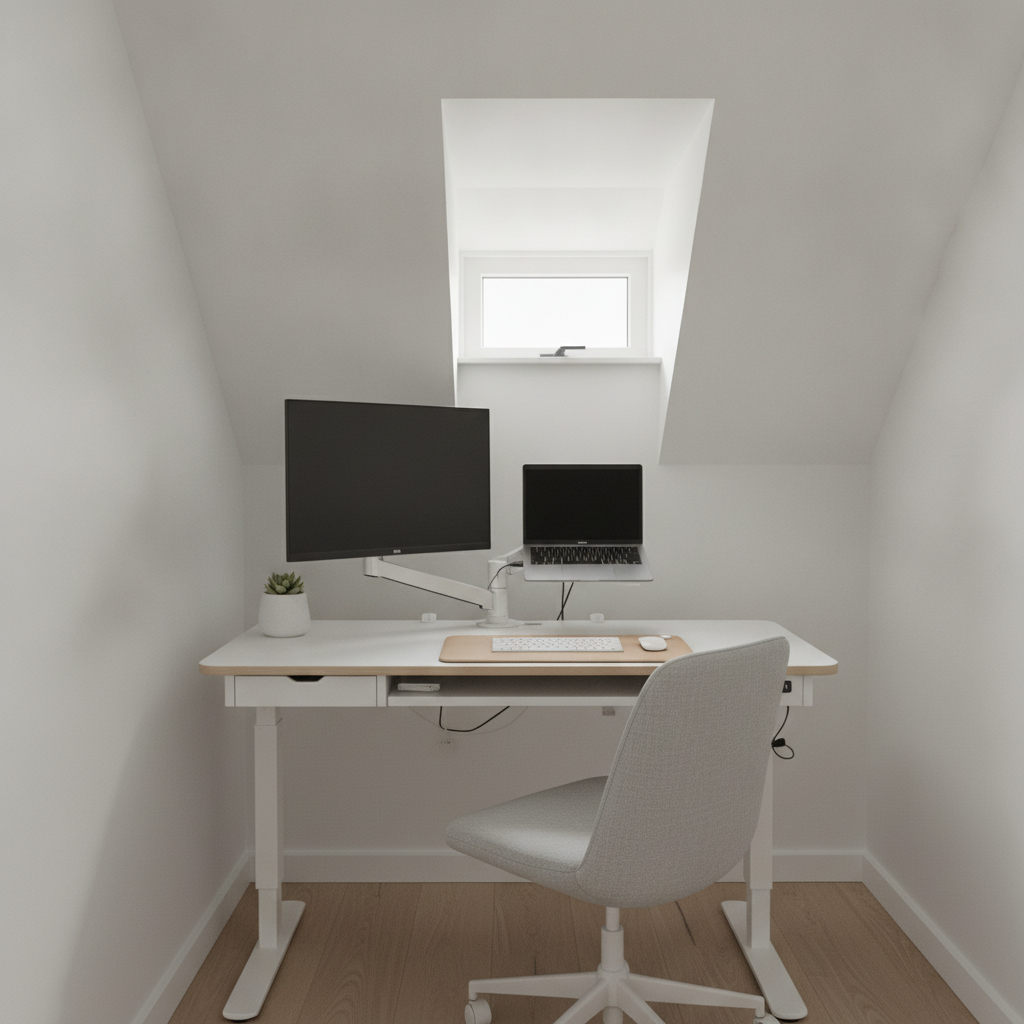
When your home office is really just a corner, a closet, or a narrow alcove, the standard 48-inch standing desk simply won't cut it. Anything wider than 40 inches can turn a small room into an obstacle course. This guide zeroes in on ultra-compact standing desks under 40 inches wide, comparing real dimensions, motor types, weight limits, and stability so you can pick a desk that actually fits your space instead of guessing and returning it later.
Why Width Matters More Than Any Other Spec
In a spacious office, width is a minor detail. In a tiny room, it's the deciding factor. A desk that's even two or three inches too wide can block a door, crowd a walkway, or make a closet-office unusable. That's why this article narrows the focus specifically to models under 40 inches, unlike broader roundups that cover the full range of small-office desks. If you haven't yet, it's worth reading our complete guide, Best Standing Desks for Small Home Offices in 2026: The Complete Buying Guide, for a wider view of what's available before drilling down into these ultra-narrow options.
Measuring Your Space Before You Buy
Before comparing models, grab a tape measure. Desk dimensions on product pages are almost always for the desktop itself, not the footprint of the legs, cable trays, or keyboard trays that might stick out further.
- Measure wall to wall: Note the full width of the space where the desk will sit, including any door swing or window sill overhang.
- Account for leg spread: Many compact desks have a leg frame that's actually a few inches wider than the desktop at the base for stability.
- Check clearance behind the desk: Electric standing desks need room to sit at full height without hitting a wall-mounted shelf or sloped ceiling.
- Leave walking room: Aim for at least 24 inches of clearance behind your chair, even in a tight room, so you can stand up and move without squeezing past furniture.
For more detailed layout advice, including how to arrange storage around a narrow desk, see our companion piece, How to Set Up a Standing Desk in a Small Home Office: Layout and Storage Tips.
Manual vs Electric: What Actually Fits in Tight Rooms
Motor type affects more than convenience — it affects footprint and stability too.
Manual Crank Desks
Crank-adjustable desks are usually lighter, simpler, and often slightly narrower than their electric counterparts since they skip the motor housing. They're a solid choice for tiny rooms where every inch counts and where you don't need frequent height changes throughout the day.
Electric Desks
Compact electric desks under 40 inches do exist, but the motor and control box typically require a slightly deeper desktop or a control panel mounted on the underside of the desk, which can nudge into knee space. They're worth the trade-off if you switch between sitting and standing often, since one-touch height adjustment matters more when space constraints already make movement awkward.
Top Compact Standing Desks Under 40 Inches
Best Overall: Balanced Width and Stability
Look for models around 36 to 39 inches wide with a dual-motor electric lift and a steel C-frame base. These tend to offer the best combination of a small footprint and rock-solid stability at full height, typically supporting 150 to 175 pounds — plenty for a monitor, laptop, and desk accessories.
Best Electric Under 40 Inches
Single-motor electric desks in the 32 to 36 inch range are ideal for readers who want push-button height adjustment without sacrificing floor space. Expect a slightly slower lift speed than dual-motor models, but a noticeably smaller base footprint that suits closets and narrow nooks.
Best Manual or Crank Desk
For the tightest budgets and smallest spaces, a hand-crank desk around 31 to 35 inches wide is hard to beat. These skip the motor entirely, which keeps the frame slim and the price low, though you'll need a few extra seconds and some elbow grease to change height.
Best for Heavy Monitor Setups
If you're running a dual-monitor arm or a heavier all-in-one display, prioritize a compact desk rated for 200+ pounds of capacity, even if the desktop itself stays under 38 inches. Look for reinforced steel legs and a wider base plate, which adds stability without adding much width to the tabletop.
Best Budget Pick
Entry-level manual desks under 34 inches wide, often made from laminate rather than solid wood, offer the lowest price point for anyone testing whether a standing desk works for their routine before investing in a pricier electric model.
Stability at Full Height: What to Watch For
Narrow desks have a natural stability disadvantage: less base width means more potential wobble when raised to standing height, especially if you type with any force or lean on the desk. When comparing models, look for:
- A crossbar or brace between the legs, which significantly reduces sway at full extension.
- Steel rather than aluminum legs on any desk you plan to raise above 42 inches regularly.
- Customer reviews mentioning wobble specifically at standing height, since desks that feel sturdy while seated can behave very differently once raised.
Weight Capacity Considerations for Narrow Desks
Because compact desks have less surface area, weight distribution matters more. A monitor arm mounted near the edge of a narrow desktop puts more strain on the frame than the same setup centered on a wider surface. When shopping, check the manufacturer's stated weight capacity and subtract a reasonable buffer for anything mounted off-center, like a single monitor arm or a lamp clamp, rather than assuming the full rated capacity is available for centered, evenly distributed items.
Final Thoughts
Finding a standing desk that fits a genuinely small room comes down to precise measurements and honest expectations about stability trade-offs. A desk under 40 inches wide can absolutely support a comfortable, productive workspace, as long as you match the motor type, weight capacity, and base design to how you actually plan to use it. Once you've settled on a model, pairing it with smart layout choices, covered in our storage and setup guide, will help you make the most of even the tightest home office.