
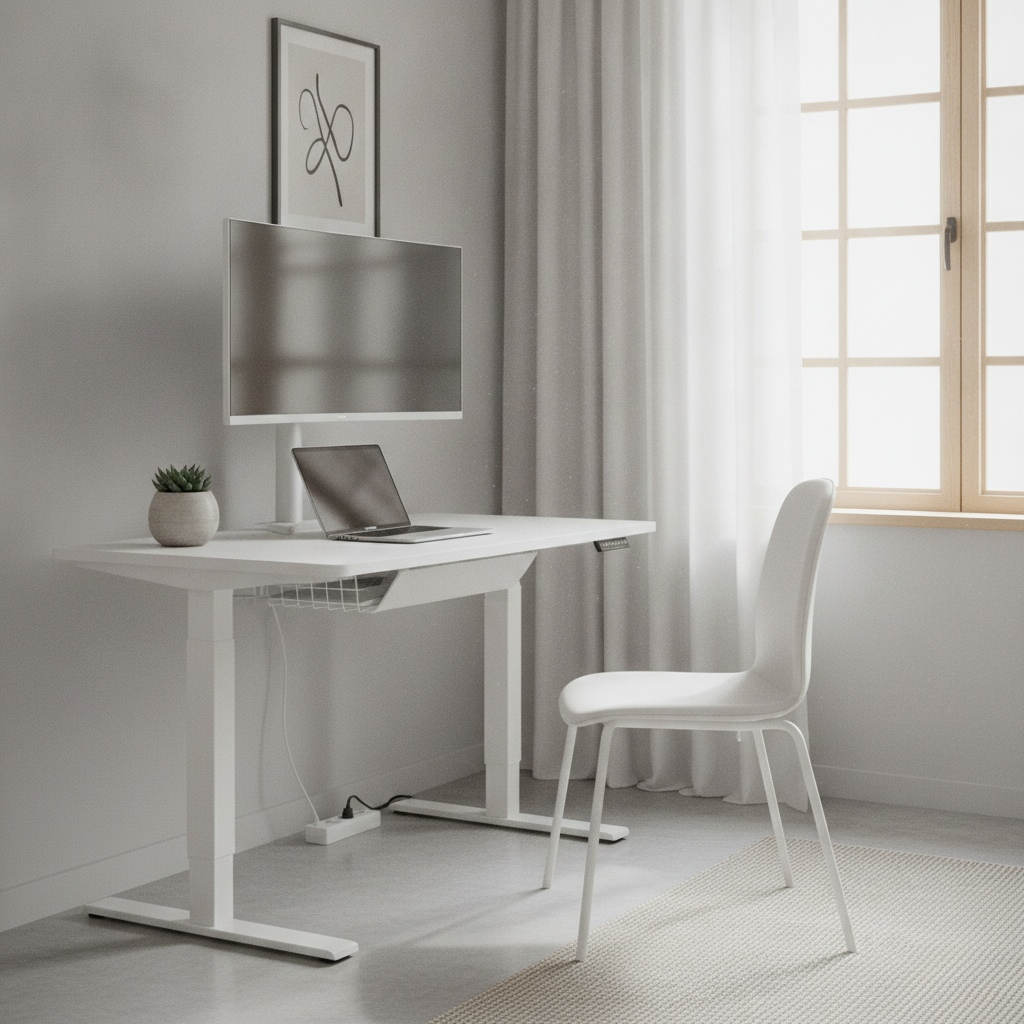
Finding the best standing desks for small home offices in 2026 means balancing three things that often fight each other: footprint, stability, and price. A desk that's compact enough to fit in a 7x8 foot room but wobbles every time you type isn't a bargain — it's a daily annoyance. This guide walks through exactly what to look for and rounds up the top standing desks across every budget and space constraint, so you can shop with confidence instead of scrolling endlessly through marketplace listings.
Whether you're outfitting a converted closet, a corner nook, or a spare bedroom, the right standing desk can make your small home office feel bigger and work harder for you.
What Makes a Standing Desk Great for a Small Home Office?
Not every standing desk that claims to be "space-saving" actually performs well in a cramped room. Before comparing specific models, it helps to understand the criteria that separate a genuinely good small-office desk from one that just looks compact in a product photo.
Footprint and Depth
Width gets most of the attention, but depth (front-to-back measurement) is just as important in small rooms, especially if the desk needs to sit against a wall with a door swinging nearby. Look for desks under 48 inches wide and 24-28 inches deep if your room is genuinely tight. For a deeper breakdown of ultra-compact options, see our dedicated guide to compact standing desks under 40 inches.
Weight Capacity and Stability
Smaller frames sometimes cut corners on stability to save space. Check the weight rating (aim for at least 150 lbs if you use multiple monitors) and look for reviews mentioning wobble at full height. Dual-motor lifting columns generally outperform single-motor and crank versions in a small footprint.
Cable Management and Clutter Control
In a small room, visible cable spaghetti feels twice as chaotic as it would in a larger office. Prioritize desks with built-in cable trays, grommet holes, or under-desk baskets. We cover this in more detail in our guide on setting up a standing desk in a small home office, including layout tricks that free up floor space.
Price Tiers
Standing desks for small spaces generally fall into three price brackets: budget (under $250), mid-range ($250-$500), and premium ($500+). Higher price usually buys quieter motors, better cable management, and sturdier steel frames — but plenty of budget options perform well for light use.
Top Picks: Best Standing Desks for Small Home Offices in 2026
Below is a curated roundup organized by use case, so you can jump straight to the category that matches your space and budget.
Best Budget Pick
Budget-friendly electric desks in the $180-$230 range now commonly include single-motor lifts, laminate tops, and basic cable trays. They're a great entry point if you're testing whether a standing desk fits your work habits before investing more. Expect a slightly slower lift speed and a narrower height range, but solid day-to-day reliability for desks in the 40-44 inch width range.
- Pros: Affordable, easy to assemble, adequate for single-monitor setups
- Cons: Slower height adjustment, less weight capacity, fewer finish options
Best Premium Pick
Premium desks in the $500-$700 range typically feature dual motors, bamboo or solid-wood tops, memory height presets, and reinforced steel frames rated for 220+ lbs. These are worth the investment if you use a heavier dual-monitor arm setup or want near-silent operation in a small room where every sound is more noticeable.
- Pros: Whisper-quiet lift, excellent stability at full height, premium finishes
- Cons: Higher upfront cost, longer shipping lead times
Best Compact Pick
If your room genuinely can't accommodate anything over 40 inches wide, compact-class desks are purpose-built for tiny footprints without sacrificing much stability. These desks often pair a narrower top with a slightly deeper base for balance. For a full lineup of these ultra-small options, our companion article on compact standing desks under 40 inches goes into much greater detail on specific models and dimensions.
- Pros: Fits in the tightest rooms, often lighter for easy repositioning
- Cons: Limited desktop surface for accessories, may need a monitor arm
Best Corner-Friendly Pick
Corner desks maximize usable surface area without adding to the room's visual footprint, since they tuck into an unused angle rather than extending into walking paths. Look for adjustable-height corner units with an L-shaped or wedge-shaped top; these are increasingly available in 2026 with electric lift columns rather than the fixed-height versions common a few years ago.
- Pros: Maximizes surface area, keeps walkways clear, great for dual-purpose rooms
- Cons: Trickier to assemble, fewer color/finish choices than rectangular desks
Buying Advice: How to Choose Between These Options
Start by measuring your actual available wall space, including door swing and any radiators or outlets you need to avoid. Then decide whether you prioritize desktop surface area (go corner or mid-range) or absolute minimal footprint (go compact). Finally, match your budget tier to your usage intensity — occasional standing sessions don't require a premium dual-motor frame, but daily all-day use justifies spending more for durability and quiet operation.
It's also worth thinking ahead to how you'll arrange the rest of the room around the desk. Our guide to setting up a standing desk in a small home office covers layout patterns, storage add-ons, and lighting placement that pair well with any of the desks listed above.
Frequently Asked Questions
Are standing desks stable enough for small home offices?
Yes, as long as you choose a model with an appropriate weight rating and, ideally, a dual-motor lift system. Stability issues in small desks usually stem from underpowered single-motor frames being pushed beyond their rated capacity, not from the small footprint itself.
How much floor space do I actually need?
Beyond the desk's own footprint, allow at least 30 inches of clearance behind the chair for standing and sitting transitions comfortably. A desk that fits against the wall but leaves no room to push back your chair will feel cramped regardless of its dimensions.
What's the best way to manage cables in a tiny office?
Use a combination of an under-desk cable tray, adhesive clips along the desk legs, and a single power strip mounted to the frame itself rather than sitting on the floor. This keeps cords off the ground, which matters more in small rooms where floor space doubles as walking space.
Do I need a standing desk converter instead of a full desk?
Converters can work in extremely tight spaces, but they typically sacrifice desktop stability and add height to your existing surface, which can be awkward in rooms with low ceilings or shelving above the desk. A dedicated compact standing desk usually offers a better long-term experience.
Choosing among the best standing desks for small home offices ultimately comes down to matching footprint, stability, and price to how you actually work. Use the categories above as a starting point, then dig into our companion guides for compact models and full room setup strategies to finish outfitting your space.