
What Is the Guaranteed Analysis?
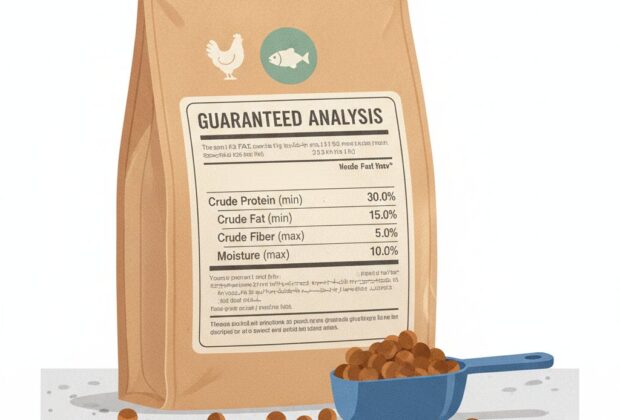
Every bag or can of pet food sold in the United States is required to display a section called the "Guaranteed Analysis." This small box of numbers lists the minimum or maximum percentages of certain nutrients found in the food, as regulated by the Association of American Feed Control Officials (AAFCO). While it looks simple, the guaranteed analysis is one of the most misunderstood parts of a pet food label — and misreading it can lead to inaccurate conclusions about a food's quality or nutritional value.
This article breaks down exactly what these percentages mean, why they're listed as minimums and maximums rather than exact values, and how to use a simple calculation to fairly compare foods with very different moisture content. If you haven't already, it's worth starting with our full guide on how to read pet food labels for broader context on how this section fits into the label as a whole.
The Four Core Numbers: Protein, Fat, Fiber, and Moisture
At minimum, the guaranteed analysis must include four values:
- Crude Protein (minimum %): The total amount of protein in the food, measured by a lab test that detects nitrogen content. "Crude" refers to the testing method, not the quality of the protein source.
- Crude Fat (minimum %): The total fat content, which provides concentrated energy and supports skin, coat, and hormone health.
- Crude Fiber (maximum %): The indigestible plant material in the food, which affects digestion and stool quality.
- Moisture (maximum %): The water content of the food. Dry kibble typically contains 8-12% moisture, while canned or wet food can contain 70-85% moisture.
Some labels also voluntarily include additional guarantees, such as calcium, phosphorus, omega fatty acids, or ash content. These extras can be helpful for pets with specific health needs, such as joint support or urinary health, but they aren't required by law.
Why "Crude" Doesn't Mean "Low Quality"
Many pet owners assume "crude protein" implies a cheap or inferior ingredient, but this isn't the case. The term simply describes the laboratory method used to estimate protein content by measuring nitrogen levels. It doesn't indicate digestibility, amino acid profile, or biological value. A food with 30% crude protein from a poor-quality source may actually provide less usable nutrition than a food with 24% crude protein from highly digestible animal sources. For more on evaluating protein sources themselves, see our guide on decoding pet food ingredient lists.
Why Numbers Are Minimums and Maximums, Not Exact Values
Manufacturers aren't required to state the exact amount of each nutrient — only a guaranteed floor (for protein and fat) or ceiling (for fiber and moisture). This means the actual protein content could be higher than what's printed, but it legally cannot be lower. This flexibility accounts for natural variation in raw ingredients between production batches, but it also means two bags with the same "guaranteed" protein percentage could have meaningfully different actual nutrient content.
The Problem With Comparing Numbers Directly
One of the most common mistakes pet owners make is comparing the guaranteed analysis of a dry food directly to a wet food. Because wet food contains so much more water, its nutrient percentages appear much lower on paper, even if the food is just as nutritious — or more so — once water is accounted for.
For example, a dry kibble might show 26% crude protein, while a canned food shows only 8% crude protein. At first glance, the kibble looks far richer in protein. But this comparison is misleading because the two foods have drastically different moisture levels. To make an accurate comparison, you need to strip away the water content and look at the nutrients on a "dry matter basis."
How to Calculate Dry Matter Basis
Dry matter basis (DMB) recalculates each nutrient percentage as if all moisture were removed, allowing you to compare wet and dry foods on equal footing. Here's the step-by-step process:
Step 1: Find the Dry Matter Percentage
Subtract the moisture percentage from 100. For example, if a canned food has 78% moisture:
100 − 78 = 22% dry matter
Step 2: Divide the Nutrient Percentage by the Dry Matter Percentage
Take the guaranteed analysis percentage for the nutrient you're evaluating (say, crude protein at 8%) and divide it by the dry matter percentage, then multiply by 100:
(8 ÷ 22) x 100 = 36.4% protein on a dry matter basis
Step 3: Compare Apples to Apples
Now you can compare that 36.4% dry matter protein figure against a dry kibble's label. If the kibble lists 26% crude protein and only 10% moisture, its dry matter calculation would be:
(26 ÷ 90) x 100 = 28.9% protein on a dry matter basis
In this example, the canned food actually contains significantly more protein per unit of actual food material than the kibble, despite appearing far lower on the original label. This is why dry matter basis is the only fair way to compare wet and dry formulas.
A Quick Reference Formula
- Dry Matter % = 100 − Moisture %
- Nutrient on DMB = (Guaranteed % ÷ Dry Matter %) x 100
Keep this formula handy when comparing any two foods with different moisture levels, including comparing a dry food to a semi-moist treat or a raw diet.
How These Numbers Relate to Your Pet's Actual Needs
Understanding the guaranteed analysis is only useful if you also understand what your pet actually requires. AAFCO publishes minimum nutrient profiles for different life stages — puppies and kittens generally need higher protein and fat minimums than adult maintenance diets, while senior pets or those with health conditions may need adjusted levels of fiber, fat, or protein.
When evaluating a food's guaranteed analysis against your pet's needs, consider the following:
- Activity level: Highly active or working dogs often benefit from higher fat and protein percentages for sustained energy.
- Life stage: Growth and reproduction formulas require higher minimums than adult maintenance foods under AAFCO guidelines.
- Weight management: Pets needing to lose weight may benefit from higher fiber (for satiety) and lower fat percentages, always on a dry matter basis for accurate comparison.
- Medical conditions: Pets with kidney, liver, or digestive issues often require specific protein, phosphorus, or fiber targets set by a veterinarian — always consult your vet before changing a therapeutic diet based on label numbers alone.
What the Guaranteed Analysis Doesn't Tell You
It's important to recognize the limitations of this section. The guaranteed analysis doesn't indicate ingredient quality, digestibility, or where the protein and fat actually come from. Two foods with identical guaranteed analysis numbers can have very different nutritional value depending on their ingredient sources. For that level of detail, you'll need to look at the ingredient list itself, which is covered in depth in our article on decoding pet food ingredient lists. Similarly, the guaranteed analysis says nothing about calorie content — for that, you'll need to check the calorie statement, usually found elsewhere on the package or in the manufacturer's product documentation.
Practical Tips for Using the Guaranteed Analysis
- Always convert to dry matter basis before comparing wet, dry, freeze-dried, or raw foods.
- Don't assume higher protein automatically means better quality — check ingredient sources too.
- Use the guaranteed analysis alongside AAFCO life stage statements to confirm a food is appropriate for your pet's age and condition.
- If your pet has a medical condition, ask your veterinarian for specific nutrient targets and use dry matter calculations to screen potential foods.
- Remember that guaranteed minimums and maximums can vary slightly between batches, so treat the numbers as a close approximation rather than an exact figure.
Final Thoughts
The guaranteed analysis is a useful starting point for evaluating pet food, but it only tells part of the story. By understanding what crude protein, fat, fiber, and moisture actually measure — and by learning to calculate dry matter basis — you can make far more accurate comparisons between products, especially when choosing between wet and dry formulas. Pair this knowledge with a careful read of the ingredient list and an understanding of your pet's individual needs, and you'll be well equipped to choose a food that truly supports their health.