
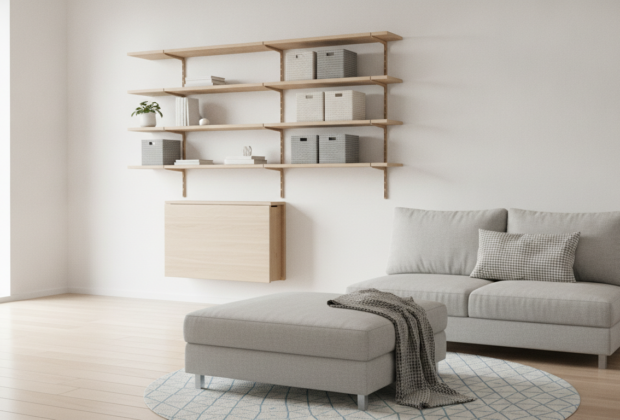
Living in a small apartment, studio, or tiny home doesn't mean you have to live with clutter and chaos. The difference between a cramped space that feels chaotic and a compact space that feels intentional often comes down to strategy, not square footage. This guide breaks down the fundamental principles that professional organizers use to transform tight spaces into functional, breathable homes.
Start With a Real Declutter, Not a Quick Tidy
Before you buy a single storage bin, you need to reduce what you own. Small space organization fails most often because people try to organize items they don't actually need. Professional organizers recommend the four-box method: keep, donate, sell, and trash. Go room by room, and be honest about what you've used in the last year.
The One-In, One-Out Rule
Once you've decluttered, maintain your progress with a simple rule: for every new item that enters your home, one item must leave. This keeps clutter from creeping back in, which is especially important in small spaces where every square inch matters.
Think Vertically, Not Just Horizontally
Floor space is the most limited resource in a small home, but wall space is often underutilized. Vertical storage is one of the most effective small space organization hacks because it lets you store more without expanding your footprint.
- Install floating shelves above desks, beds, and sofas to display books and decor without eating into floor space.
- Use over-the-door organizers in closets, bathrooms, and pantries for shoes, cleaning supplies, or accessories.
- Add tall bookcases instead of wide, low ones to maximize storage per square foot of floor space.
- Mount hooks and pegboards in entryways, kitchens, and craft areas for tools, bags, and utensils.
Invest in Multi-Functional Furniture
Every piece of furniture in a small space should ideally serve more than one purpose. This is a core principle behind nearly every successful small-space transformation.
Furniture With Built-In Storage
Ottomans with hidden compartments, storage beds with drawers underneath, and coffee tables with shelving all add storage without adding bulk. Look for furniture explicitly designed for small spaces, as manufacturers increasingly cater to apartment and studio dwellers.
Furniture That Transforms
Fold-down desks, murphy beds, and extendable dining tables let a single piece of furniture serve multiple functions depending on the time of day. This is especially valuable in studio apartments where a bedroom, office, and living room might occupy the same physical space.
Organize Room by Room
General principles are helpful, but small space organization hacks work best when applied to the specific challenges of each room.
Bedrooms and Closets
Bedrooms in small homes often double as storage rooms by default. Under-bed storage bins, slim dressers, and closet systems designed for tight spaces can make a dramatic difference. For a deeper breakdown of exactly how to maximize a tiny bedroom closet, check out our guide to 15 Genius Small Closet Organization Ideas for Tiny Bedrooms, which covers hanging systems, shelf dividers, and space-saving hangers in detail.
Kitchens
Small kitchens present unique challenges because cabinets and drawers often have awkward shapes and limited depth. Drawer dividers, stackable shelves, and door-mounted racks can drastically increase usable storage. We go into much greater detail on this topic in our guide to Small Kitchen Storage Solutions: How to Organize Every Cabinet and Drawer, which walks through cabinet-by-cabinet strategies.
Living Rooms and Entryways
In shared or combined living spaces, baskets and bins are your best friend. Group similar items together in labeled containers that can be tucked onto shelves or under furniture. In entryways, a small bench with storage underneath can double as a landing spot for shoes and bags.
Use Labels and Zones to Maintain Order
Organization isn't a one-time event; it's a system you maintain daily. Creating designated zones for specific categories of items, and labeling containers clearly, makes it far easier to put things back where they belong. This reduces the daily friction that often leads to clutter creeping back into small spaces.
Final Thoughts
Small space organization hacks work best when they're layered together: decluttering creates room to breathe, vertical storage maximizes your walls, multi-functional furniture reduces bulk, and room-specific strategies tackle the unique challenges of each area in your home. Start with one room, apply these principles, and build momentum from there. Small, consistent changes compound into a home that feels significantly larger and calmer, no matter its actual square footage.