
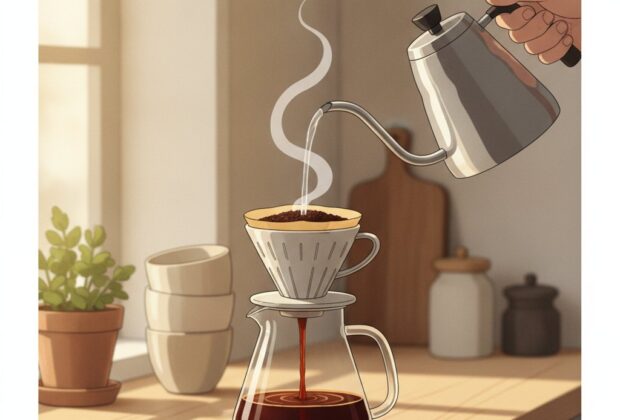
What Extraction Really Means
Coffee extraction is the process of dissolving flavorful compounds out of ground coffee using hot water. Acids, sugars, and bitter compounds dissolve at different rates during brewing, and the goal of a great pour-over is to extract them in the right proportion. Too little extraction and your coffee tastes sour and thin; too much and it turns bitter and harsh. Understanding this chemistry gives you control over every cup you brew.
The Key Variables That Control Extraction
Grind Size
Grind size determines how quickly water can pull flavor from the coffee particles. Finer grinds extract faster because they expose more surface area, while coarser grinds slow extraction down. Getting this variable right is foundational, and we cover it in depth in our guide to grind size for pour-over coffee.
Water Temperature
Water between 195-205°F (90-96°C) is ideal for most pour-over methods. Water that's too cool under-extracts, leaving sour, muted flavors, while water that's too hot can pull out excessive bitterness.
Water Quality
The mineral content of your water significantly affects how compounds dissolve during brewing. Water that's too soft or too hard can mute flavor or create harsh, chalky notes. This topic deserves its own deep dive, which you can find in our article on water chemistry's role in pour-over coffee taste.
Brew Ratio
The ratio of coffee to water determines strength and balance. A common starting point is 1:16 (one gram of coffee to sixteen grams of water), though you can adjust to taste. Precise ratios, ideally measured by weight with a scale, remove guesswork from your process.
Pour Technique and Time
How you pour water over the grounds affects extraction evenness. A slow, controlled, circular pour ensures uniform saturation, while dumping water quickly can create channels that lead to uneven extraction. Total brew time typically falls between 2.5 and 4 minutes.
Step-by-Step Pour-Over Process
1. Gather Your Equipment
You'll need a pour-over dripper (such as a V60 or Chemex), a paper or metal filter, a gooseneck kettle, a digital scale, and a burr grinder.
2. Rinse the Filter
Rinse your paper filter with hot water to remove any papery taste and preheat your brewing vessel.
3. Measure and Grind
Weigh your coffee beans and grind them to a medium-fine consistency, similar to table salt, adjusting based on your dripper style.
4. Bloom the Coffee
Pour just enough hot water to saturate the grounds (roughly double the coffee's weight) and let it sit for 30-45 seconds. This releases trapped carbon dioxide and prepares the grounds for even extraction.
5. Pour in Stages
Continue pouring in slow, controlled circles, adding water in two or three stages until you reach your target weight. Avoid pouring directly against the filter's edge.
6. Let It Drain and Serve
Allow the coffee to finish draining completely, then serve immediately for the best flavor and aroma.
Troubleshooting Common Extraction Problems
Sour or Sharp Flavor
This usually signals under-extraction. Try grinding finer, using hotter water, or extending your brew time.
Bitter or Harsh Flavor
This points to over-extraction. Coarsen your grind, lower your water temperature slightly, or shorten your total brew time.
Weak or Watery Coffee
Check your brew ratio first—you may need more coffee relative to water. Uneven pouring can also cause weak spots in the final cup.
Bringing It All Together
Mastering pour-over extraction is about understanding how each variable interacts with the others. Once you dial in your grind size, water quality, ratio, and pour technique, you'll be able to replicate a balanced, flavorful cup consistently, and fine-tune it further to match your personal taste preferences.