
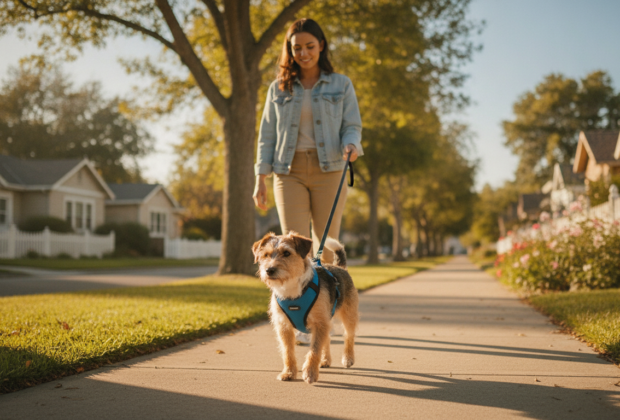
If you've ever been dragged down the sidewalk by a determined ten-pound terrier, you already know that small dogs can pull just as hard as their bigger counterparts—proportionally speaking. No-pull harnesses have become a popular solution, but do they actually work, or are they just a marketing buzzword? Let's dig into the mechanics, the science, and the real-world results.
How No-Pull Harnesses Actually Work
No-pull harnesses don't use punishment or discomfort to stop pulling. Instead, they rely on simple physics: redirecting your dog's momentum so that pulling becomes less effective or rewarding. Most designs achieve this through the placement of the leash attachment point, which changes the direction your dog is pulled when they lunge forward.
Front-Clip Designs
Front-clip harnesses feature a leash attachment on the dog's chest. When a small dog pulls forward, the front clip gently turns the dog sideways, disrupting their forward momentum and redirecting their attention back toward you. This makes pulling physically less efficient without causing pain or restricting breathing—an important consideration for brachycephalic small breeds like Pugs or French Bulldogs.
Dual-Clip Designs
Dual-clip harnesses offer both a front chest ring and a back ring, giving owners flexibility depending on the situation. Many trainers recommend using both connection points simultaneously with a double-ended leash, which provides more consistent steering and control, especially for reactive or easily distracted small dogs.
The Science Behind Reduced Pulling
The effectiveness of no-pull harnesses isn't just anecdotal. Redirecting a dog's center of gravity interrupts the reinforcement cycle of pulling: dogs pull, they get somewhere faster, and the behavior is reinforced. By making forward pulling awkward or ineffective, front-clip designs remove that reward, which over time can reduce the frequency and intensity of pulling—especially when paired with consistent training.
It's worth noting that no-pull harnesses are a management tool, not a magic fix. They work best as part of a broader strategy that includes positive reinforcement training, not as a standalone solution.
Top No-Pull Harness Picks for Small Breeds
When shopping for a no-pull harness, small dog owners should prioritize lightweight materials, adjustable straps, and padded chest plates to prevent chafing. Below are the categories of harnesses that consistently perform well for toy and small breeds:
- Step-in front-clip harnesses: Easy to put on nervous or wiggly dogs, with minimal fuss over the head.
- Vest-style dual-clip harnesses: Offer more surface area for even pressure distribution, ideal for dogs with sensitive necks or collapsing tracheas.
- Adjustable Y-front harnesses: Allow full range of motion in the shoulders while still providing a front-clip option for training control.
For a full breakdown of specific brands, features, and price points, check out our companion guide, Best Dog Harnesses for Small Breeds: The Complete Buying Guide, which covers top-rated options in more detail.
Training Techniques to Pair With a No-Pull Harness
A no-pull harness works best when combined with basic leash manners training. Here are a few techniques that amplify results:
- The stop-and-go method: Stop walking the moment your dog pulls, and only resume once the leash is slack. This teaches your dog that pulling gets them nowhere.
- Reward-based heel training: Use treats to reinforce walking beside you, gradually increasing the distance between rewards.
- Short, frequent sessions: Small dogs often have shorter attention spans, so 5-10 minute training sessions work better than long walks focused solely on correction.
Common Concerns: Comfort and Effectiveness
One of the biggest worries owners have is whether a no-pull harness will be comfortable for toy breeds with delicate frames. The key is proper fit—a harness that's too tight can chafe or restrict movement, while one that's too loose may allow a dog to back out or twist during a front-clip redirect. Choosing padded straps and breathable mesh panels helps prevent rubbing during regular use.
If you're unsure how to get an accurate fit, our article How to Measure Your Small Dog for the Perfect Harness Fit walks through the exact measurements you'll need before purchasing.
Another common concern is whether no-pull harnesses actually stop pulling long-term or just mask the symptom. In most cases, they reduce pulling intensity immediately while training addresses the underlying behavior over time. Dogs with high anxiety or reactivity may need additional behavioral support alongside the harness for lasting results.
Final Verdict: Are No-Pull Harnesses Worth It?
For most small dog owners, a well-fitted no-pull harness makes daily walks noticeably more manageable, reducing strain on both the dog's neck and the owner's arm. While it's not an instant training solution, it's an effective, humane tool that—combined with consistent training—can genuinely transform a chaotic walk into a calm, enjoyable outing.