
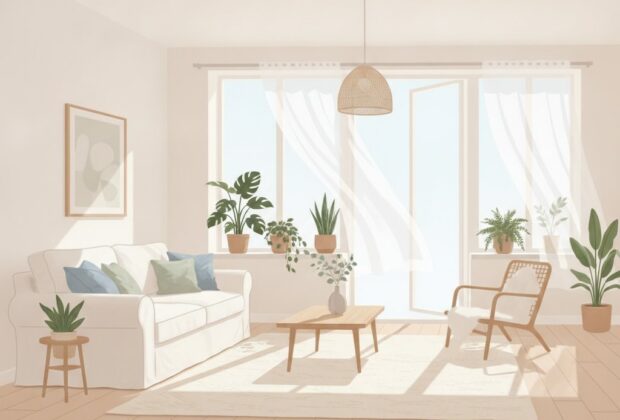
Why Natural Ventilation Matters
Fresh air circulation is one of the most overlooked aspects of a healthy home. While mechanical solutions like air purifiers play an important role, as covered in our guide to Best Air Purifiers for Cleaner Home Air, natural ventilation for indoor air quality remains the foundation of any healthy indoor environment. Opening windows strategically and encouraging airflow can reduce indoor pollutants, moisture buildup, and stale air without spending a dime on equipment.
This guide focuses specifically on low-tech, cost-free strategies you can start using today, whether you live in a spacious house or a compact apartment.
Understanding Cross-Ventilation
Cross-ventilation occurs when air enters through one opening and exits through another, creating a natural breeze that flushes out stale air. To achieve this effectively:
- Open windows on opposite sides of a room or building whenever possible
- Create a slight pressure difference by opening one window wider than the other
- Keep interior doors open to allow air to travel freely between rooms
- Use door and window screens to keep airflow going while blocking insects
Even a 10-15 minute cross-ventilation session in the morning and evening can significantly refresh indoor air, especially after cooking, cleaning, or a night of closed windows.
Smart Window Placement Strategies
If you're building, renovating, or simply rearranging furniture, window placement plays a critical role in airflow efficiency. Consider the following:
Position Windows for Prevailing Winds
Identify the direction your local prevailing winds typically blow and position your most-used windows to capture that airflow. Kitchens and bathrooms, which generate excess moisture and odors, benefit greatly from windows aligned with these wind patterns.
Use High and Low Openings
Warm air rises, so combining a lower window or door opening with a higher one (such as a transom window or vent) encourages a natural convection current, pulling cooler air in low and pushing warmer, stale air out high.
The Role of Exhaust Fans in a Natural Ventilation Strategy
While this guide emphasizes machine-free methods, exhaust fans in kitchens and bathrooms deserve a mention because they support natural airflow rather than replace it. Running a bathroom fan during and after showers, or a kitchen exhaust fan while cooking, helps remove humidity and odors before they spread throughout the home. Pair this with an open window nearby to create a mini cross-ventilation loop that clears the air quickly.
Seasonal Ventilation Routines
Ventilation needs shift throughout the year, and adjusting your habits seasonally ensures consistent air quality.
Spring and Fall
These are ideal seasons for maximizing natural ventilation. Mild temperatures allow for extended window-opening periods, so take advantage by airing out closets, bedrooms, and living spaces daily.
Summer
Ventilate during cooler morning and evening hours to avoid pulling in hot, humid air during peak daytime heat. Combine this with fans to keep air moving without over-relying on air conditioning.
Winter
Short, frequent bursts of ventilation—5 to 10 minutes with windows wide open—are more effective than leaving windows cracked all day, which wastes heat. This quick-burst method refreshes air while minimizing heat loss.
Ventilating Apartments and Homes with Limited Airflow
Not every home has the luxury of multiple windows or opposing walls for cross-ventilation. If you live in an apartment or a home with limited natural airflow options, try these adaptations:
- Use a single window with a box fan to push air out, drawing fresh air in through door gaps or a second smaller opening
- Keep interior doors open to let air circulate between rooms even without a direct cross-breeze
- Ventilate closets, cabinets, and storage areas periodically, as these enclosed spaces trap stale air and moisture
- Consider a window vent or trickle vent installation for consistent, low-level airflow even when windows are closed for security or noise reasons
For a broader look at combining these techniques with other air quality improvements, our comprehensive resource, Improve Indoor Air Quality: Complete Home Guide, offers additional context on how ventilation fits into a whole-home strategy.
Building a Sustainable Ventilation Habit
Natural ventilation for indoor air quality works best as a consistent habit rather than an occasional fix. Set simple daily reminders, such as opening windows right after waking up or during meal cleanup, to build airflow into your routine naturally. Over time, these small, no-cost adjustments can meaningfully improve the freshness and healthiness of your indoor environment.