
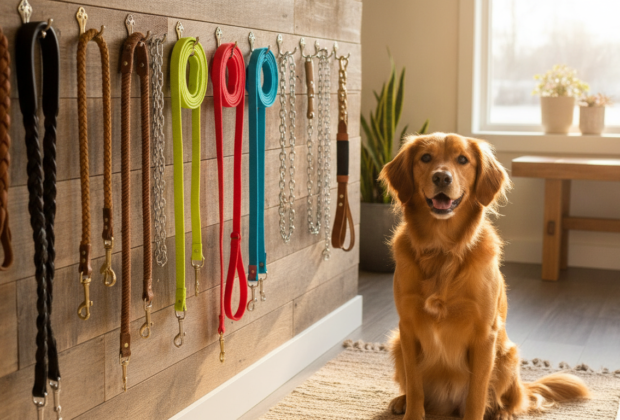
Choosing the right leash for your dog isn't just about grabbing the first one you see at the pet store. The perfect leash depends on your dog's size, weight, behavior, and even your own walking habits. A poor match can lead to discomfort, safety risks, or a frustrating daily struggle. This guide breaks down everything you need to know to make a confident, informed choice.
Why Leash Selection Matters More Than You Think
A leash is more than a simple accessory — it's a safety tool and a communication device between you and your dog. The wrong leash can cause hand burns from rope friction, encourage pulling, or even snap under pressure from a large, powerful breed. On the other hand, a well-matched leash improves control, reduces strain on your joints, and makes walks more enjoyable for both of you.
Understanding Leash Materials
Nylon Leashes
Nylon is the most popular leash material thanks to its affordability, lightweight feel, and wide range of colors and patterns. It's durable enough for most dogs but can cause rope burn if your dog lunges suddenly. Nylon works well for small to medium dogs with moderate energy levels.
Leather Leashes
Leather leashes are prized for their durability and comfortable grip, which softens with age rather than fraying. They're an excellent choice for daily use and tend to be gentler on hands during sudden pulls. The main downside is cost and the need for occasional conditioning to prevent cracking.
Chain Leashes
Chain leashes are built for dogs that chew through fabric or leather leashes. They're extremely durable but heavy and less comfortable to hold for long walks. These are best reserved for specific behavioral issues rather than everyday use.
Matching Leash Length to Your Dog's Needs
Standard leashes typically range from 4 to 6 feet, which offers a good balance of control and freedom for most walking situations. Shorter leashes (2-3 feet) are ideal for training, crowded urban environments, or dogs that need tight control near traffic. Longer leashes (10-30 feet) suit training recall or giving well-behaved dogs more room to explore in open spaces.
Width and Weight Considerations by Breed Size
Leash width should scale with your dog's size and strength:
- Small dogs (under 20 lbs): 3/8 to 1/2 inch wide leashes are usually sufficient
- Medium dogs (20-50 lbs): 1/2 to 3/4 inch width provides adequate strength
- Large dogs (50+ lbs): 3/4 inch to 1 inch wide leashes offer the durability needed for powerful pullers
Using a leash too thin for a large, strong dog risks snapping under pressure, while an overly thick leash on a small dog can feel cumbersome and unnecessary.
How Behavior Should Influence Your Choice
Pullers and Reactive Dogs
If your dog tends to pull hard or reacts strongly to other animals, a standard leash paired with a front-clip harness often provides better control than a leash alone. For dogs with serious pulling habits, our detailed guide on Best Leashes for Strong Dogs That Pull covers specialized options designed to reduce strain and improve handling.
Puppies and Young Dogs
Puppies require lightweight leashes that won't overwhelm their developing bodies, along with training-friendly features like adjustable lengths. Since puppies grow quickly, choosing gear that adapts over time saves money and hassle — a topic explored in depth in our Puppy Leash Guide.
Calm, Well-Trained Dogs
Dogs with solid leash manners have more flexibility in leash choice, including retractable or hands-free options that offer greater freedom without sacrificing safety.
Standard vs. Retractable vs. Hands-Free Leashes
Standard leashes remain the safest all-around choice, offering consistent length and reliable control. Retractable leashes provide flexibility for dogs that walk calmly but can be risky in crowded areas or with dogs prone to sudden lunging, since the thin cord can cause injury if it wraps around a leg or hand. Hands-free leashes, worn around the waist, are popular among runners and hikers with well-behaved dogs, freeing up your hands while maintaining a secure connection.
Safety Features Worth Considering
Look for leashes with reflective stitching for nighttime visibility, padded handles to reduce hand fatigue, and sturdy metal clips rated for your dog's weight. Double-handle designs offer extra control near traffic or in high-distraction environments, giving you a shorter grip option when needed.
Durability and Budget Tips
Investing in a slightly more expensive, high-quality leash often pays off in longevity and safety, especially for larger or more active dogs. Budget-conscious owners should prioritize strong stitching, reinforced clips, and materials suited to their dog's specific chewing or pulling tendencies rather than simply choosing the cheapest option available.
Final Thoughts
Choosing the right leash comes down to honestly assessing your dog's size, strength, and behavior alongside your own lifestyle and walking environment. Taking the time to match these factors will result in safer, more enjoyable walks for years to come.