
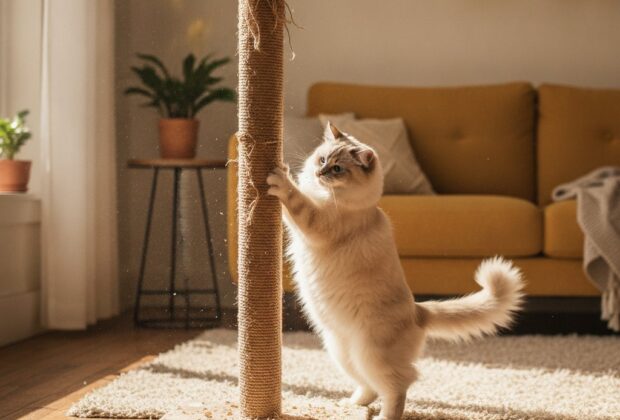
Bringing home a scratching post doesn't guarantee your cat will actually use it. Many cat owners buy the first post they see at the pet store, only to watch their cat walk right past it toward the couch. The truth is that scratching post success depends on choosing the right type and material, then following a deliberate training process. This guide breaks down exactly how to do both.
Why the Right Scratching Post Matters
Cats scratch to stretch their muscles, shed old claw sheaths, and mark territory with scent glands in their paws. If a scratching post doesn't satisfy these instincts, your cat will find something that does, usually your furniture. As explained in our complete guide to stopping furniture scratching without punishment, redirection works far better than correction. But redirection only works if the alternative is genuinely appealing.
Comparing Scratching Post Types
Vertical Posts
Vertical scratching posts mimic tree trunks and allow cats to stretch their full body upward, which is a natural and satisfying motion. Look for posts at least 30 inches tall so an adult cat can fully extend without reaching the top. Stability is critical here: a wobbly post will scare cats away after one use. Choose posts with a wide, heavy base.
Horizontal Scratchers
Horizontal scratching pads sit flat on the floor and appeal to cats that prefer scratching at ground level rather than climbing upward. These are especially useful for senior cats or kittens who may find vertical posts less accessible. They also work well in multi-cat households where floor space is more practical than tall furniture pieces.
Cardboard Scratchers
Cardboard scratchers are affordable, lightweight, and often infused with catnip, making them a great entry point for cats new to scratching posts. However, they wear out faster than sisal or wood options and may need replacing every few months depending on how enthusiastically your cat uses them.
Materials and Textures Cats Prefer
Texture preference varies by cat, but sisal rope and sisal fabric are consistently popular because they offer resistance similar to tree bark, allowing claws to dig in and pull satisfyingly. Some cats also enjoy carpet-covered posts, though this can confuse cats into thinking household carpet is fair game too. Cardboard offers a looser, shreddable texture that some cats find irresistible for its shredding sound and feel.
If you're also using scent-based repellents on furniture to discourage scratching there, our article on natural cat scratching deterrents that actually work pairs well with this training approach, since removing the appeal of furniture while boosting the appeal of the post creates a faster behavior shift.
Step-by-Step Training Method
Step 1: Strategic Placement
Position the new scratching post near the furniture your cat currently scratches, not in a hidden corner of another room. Cats scratch in high-traffic areas near sleeping spots or entryways, so the post needs to be just as accessible and visible as the couch or chair it's replacing.
Step 2: Add Catnip or Silvervine
Sprinkle catnip or silvervine powder directly onto the post's surface, or use a catnip spray for reapplication. This creates an immediate positive association and often triggers curious sniffing and pawing behavior, which naturally transitions into scratching.
Step 3: Positive Reinforcement
Whenever your cat scratches the post, even accidentally, offer verbal praise, a small treat, or gentle petting. Timing matters: rewards should come within a few seconds of the behavior so your cat clearly connects the action with the positive outcome.
Step 4: Gradual Relocation
Once your cat consistently uses the post in its original spot, you can slowly move it a few inches at a time toward your preferred location over the course of several weeks. Moving it too quickly can cause your cat to abandon it and return to old habits.
Troubleshooting Common Problems
My Cat Ignores the New Post Entirely
Try a different texture or orientation. A cat that ignores a vertical sisal post might respond enthusiastically to a horizontal cardboard scratcher instead. Testing two types simultaneously can help you quickly identify your cat's preference without wasting weeks on the wrong option.
My Cat Reverts to Old Scratching Spots
This often happens when the post isn't stable enough or has lost its catnip scent. Reapply catnip weekly, check that the post hasn't loosened, and temporarily make the old scratching spot less appealing with double-sided tape or aluminum foil, which most cats dislike touching with their paws.
My Multi-Cat Household Needs More Than One Post
Cats can be territorial about scratching spots just as they are about litter boxes. As a general rule, provide at least one scratching post per cat, plus one extra, placed in different areas of the home to reduce competition and encourage consistent use.
Final Thoughts
Training a cat to use a scratching post is less about forcing a new habit and more about making that habit the obvious, most rewarding choice. By selecting the right type and material, placing it strategically, and reinforcing positive behavior consistently, most cats transition away from furniture scratching within a few weeks. Patience and consistency remain the two most important ingredients in this process.