
Why Memory Games for Kids Matter
Memory games for kids are one of the simplest and most effective tools parents have to strengthen a child's cognitive foundation. These playful activities do more than entertain—they build the neural pathways responsible for attention, recall, and problem-solving. As we've explored in our broader look at Cognitive Training: Boost Your Child's Mind, memory is a trainable skill, much like a muscle that grows stronger with consistent, targeted use. This article focuses specifically on the games themselves, breaking down how each one works and why it benefits developing brains.
The Science Behind Memory Games
Children's brains are remarkably plastic, meaning they adapt and reorganize in response to new experiences. When a child engages in a memory game, the brain activates the hippocampus and prefrontal cortex—regions responsible for encoding and retrieving information. Repeated practice strengthens the connections between neurons, making recall faster and more reliable over time.
Short-term memory, which holds information for a few seconds to a minute, is exercised through games that require immediate recall, like matching cards. Long-term memory, which stores information for extended periods, benefits from games that involve repetition and meaningful association, such as storytelling-based recall activities. Understanding this distinction helps parents choose games that target the specific skill they want to develop.
Short-Term vs. Long-Term Memory Development
Short-term memory games typically involve holding a small amount of information in mind for a brief period, such as remembering the location of a card in a matching game. Long-term memory games, on the other hand, encourage children to retain and retrieve information over days or weeks, such as recalling the rules of a game played previously or remembering details from a story read the night before. A well-rounded routine should include both types to support comprehensive cognitive growth.
Top Memory Games for Kids by Activity Type
1. Classic Matching Card Games
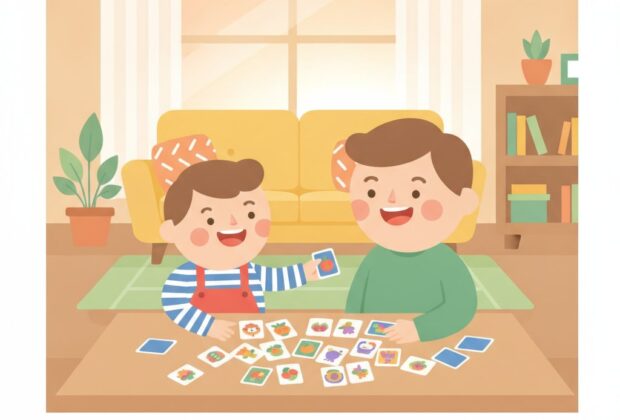
Matching games, where cards are laid face down and children flip two at a time to find pairs, are a staple among memory games for kids. This activity strengthens short-term memory and visual recognition. Younger children (ages 3-5) benefit from simplified versions with fewer cards and larger images, while older kids (ages 6-10) can handle more complex sets with smaller images or abstract symbols.
2. Sequence Repetition Games
Games like "Simon Says" or electronic sequence-repeating toys ask children to remember and repeat a growing pattern of sounds, colors, or movements. These activities train working memory, the mental workspace used to hold and manipulate information temporarily. Starting with short sequences and gradually increasing length keeps the challenge appropriate as skills improve.
3. Storytelling Recall
After reading a short story, ask your child to recount key details: characters, events, or the order in which things happened. This exercise builds long-term memory and also strengthens language and comprehension skills. It's an easy, no-equipment game that fits naturally into bedtime routines.
4. "I Went to the Market" Chain Game
This classic verbal game involves each player adding an item to a growing list while repeating all previous items in order. It's excellent for building sequential memory and attention span, and it can be played anywhere—in the car, at the dinner table, or while waiting in line.
5. Memory Scavenger Hunts
Show your child a tray of small objects for a set time, then cover it and ask them to list as many items as they remember. This classic activity, often called "Kim's Game," sharpens observational memory and attention to detail. Increasing the number of objects or reducing viewing time raises the difficulty as your child progresses.
6. Digital Memory Apps
Numerous apps and online platforms offer structured memory games for kids with adjustable difficulty levels and progress tracking. These tools can be useful for monitoring improvement over time, though they work best when balanced with screen-free, hands-on activities.
Age-Appropriate Recommendations
Choosing the right game for your child's developmental stage ensures the activity is challenging without being frustrating. For more detailed guidance on tailoring cognitive exercises to specific age ranges, see our companion piece, Brain Exercises for Kids by Age Group.
- Ages 3-5: Simple matching games with 6-8 cards, short sequence games (2-3 steps), and basic scavenger hunts with 3-5 objects.
- Ages 6-8: Matching games with 12-16 cards, longer sequence repetition (4-6 steps), and storytelling recall with multiple details.
- Ages 9-10: Complex matching sets, extended chain games, and memory scavenger hunts with 10 or more objects and shorter viewing windows.
Tips for Daily Practice
Consistency matters more than intensity when it comes to cognitive development. A few focused minutes each day tend to produce better results than occasional long sessions. Consider these practical strategies:
- Set a routine: Incorporate a memory game into an existing habit, such as after breakfast or before bedtime, so it becomes a natural part of the day.
- Keep sessions short: Ten to fifteen minutes is often enough to engage a child without causing fatigue or loss of interest.
- Gradually increase difficulty: As your child masters a level, add more cards, longer sequences, or additional objects to keep the challenge appropriate.
- Celebrate progress: Positive reinforcement encourages continued engagement and helps build a healthy relationship with learning.
- Mix game types: Rotating between visual, verbal, and sequence-based games ensures a well-rounded cognitive workout.
Measuring Improvement Over Time
Tracking progress helps parents understand whether their efforts are paying off. Simple methods include noting how many cards a child can successfully match, how long a sequence they can repeat, or how many items they recall in a scavenger hunt. Keeping a simple log or chart can make improvements visible and motivating for both parent and child.
It's important to remember that progress isn't always linear. Children may have strong days and off days, and that's entirely normal. The goal of memory games for kids isn't perfection but steady, incremental growth in cognitive capacity.
Bringing It All Together
Memory games for kids offer an enjoyable, low-pressure way to build essential cognitive skills that support academic performance, problem-solving, and everyday functioning. By understanding the science behind these activities and selecting age-appropriate options, parents can create a consistent practice that yields measurable results. Pairing these games with broader cognitive training strategies and age-specific brain exercises creates a comprehensive approach to nurturing your child's developing mind.