
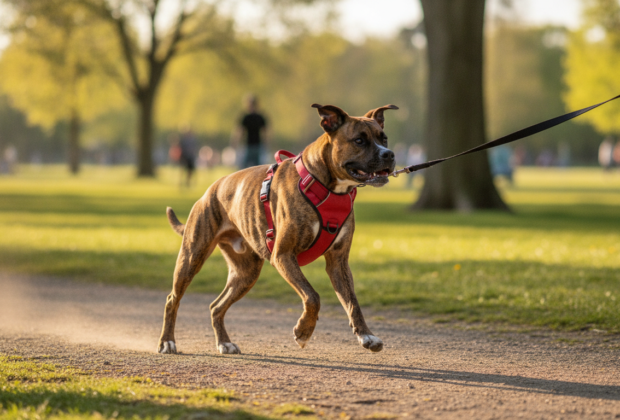
If walking your dog feels more like water-skiing behind a freight train, you're not alone. Powerful breeds and reactive dogs can turn a simple stroll into a shoulder-wrenching battle of wills. The good news? The right leash setup won't magically stop pulling overnight, but it can dramatically reduce strain, improve your control, and make training a lot more effective. Let's break down exactly what to look for.
This article builds on the fundamentals covered in our complete guide to choosing the right leash for your dog's size and behavior, but zooms in specifically on solutions for strong, determined pullers.
Why Do Dogs Pull So Hard on the Leash?
Before shopping for gear, it helps to understand the mechanics behind pulling. Dogs naturally move faster than humans, and when a leash is attached to a flat collar around the neck, pulling triggers what's called opposition reflex: the more you tug back, the more the dog instinctively pushes forward against the pressure. This is compounded in strong or high-energy breeds, and in dogs that haven't been taught leash manners yet.
Pulling isn't just annoying, it's also risky. Repeated strain on the neck can damage the trachea, especially in brachycephalic or small-necked breeds, while owners often end up with sore shoulders, wrists, or even shoulder injuries from sudden lunges. That's why equipment choice matters just as much as training.
The Core Solution: Pair a No-Pull Harness With the Right Leash
For dogs that pull hard, a harness with a front-clip attachment point is often the single most effective upgrade you can make. Unlike back-clip harnesses, which can actually encourage pulling by giving dogs something to lean into, front-clip designs redirect the dog's momentum sideways when they surge forward, making it physically harder to power through.
What to Look for in a No-Pull Harness
- Front and back clip options: Dual-clip harnesses give you flexibility to use a front clip for pulling correction and a back clip for calmer walks.
- Padded chest and belly straps: Prevents chafing during moments of sudden force.
- Martingale-style tightening (limited): Some no-pull harnesses gently tighten around the chest when the dog pulls, without restricting breathing.
- Secure, adjustable fit: A harness that's too loose can allow a strong dog to twist free, especially during sudden lunges.
Pair this harness with a sturdy, medium-length leash (around 4 to 6 feet) made from nylon webbing or leather. Avoid retractable leashes entirely for strong pullers, as the thin cord offers little control and can snap or cause rope burn under sudden tension.
Bungee and Shock-Absorbing Leashes: A Gentler Way to Manage Force
Bungee leashes have become increasingly popular for powerful dogs, and for good reason. These leashes incorporate an elastic segment, usually near the handle, that stretches slightly when the dog lunges or pulls, absorbing the jolt before it transfers directly to your arm and shoulder.
This shock-absorbing design is especially useful for:
- Owners with joint issues, arthritis, or previous shoulder injuries
- Dogs that are reactive to other animals or sudden triggers (squirrels, bikes, etc.)
- Multi-dog walkers who need extra buffer against unpredictable movement
Look for a bungee leash with a reinforced core (not just a flimsy elastic cord) and a comfortable, padded handle. Many also include a secondary handle closer to the clip, which brings us to our next key feature.
Traffic Handles: Extra Control When You Need It Most
A traffic handle is a second, shorter handle sewn a foot or so from the clip end of the leash. It's a small design detail that makes a big difference in high-distraction environments like busy sidewalks, crowded parks, or crossing streets.
With a traffic handle, you can quickly grab your dog closer to their body for tighter control without having to shorten the entire leash or awkwardly wrap it around your hand. This is particularly valuable for strong or reactive dogs that might suddenly react to another dog, a jogger, or a loud noise.
Heavy-Duty Materials Matter
For dogs in the 60-plus pound range or breeds known for explosive strength, leash material and hardware quality are non-negotiable. Look for:
- Thick nylon webbing (1 inch or wider) or genuine leather for durability
- Reinforced stitching at stress points, especially near the clip
- Heavy-gauge metal clasps (avoid plastic clips, which can shatter under force)
- Rust-resistant hardware if you walk in wet or coastal climates
Leash Length: Shorter Is Often Safer for Strong Pullers
While long leashes offer freedom for sniffing and exploring, dogs that pull hard generally do better with a shorter leash, typically 4 to 6 feet, that keeps them close and gives you faster reaction time. A shorter leash also reduces the momentum a dog can build up before hitting the end of the line, which lessens the jolt on both ends.
If your dog is still developing leash manners as a puppy, the growth-stage considerations and length recommendations in our puppy leash guide are worth reviewing, since needs change significantly as dogs grow into their adult strength.
Training Tips to Use Alongside the Right Gear
No leash or harness is a permanent fix on its own. Combine your equipment upgrade with these simple techniques for the best results:
- Stop-and-go method: Stop walking the instant the leash goes taut, and only resume once your dog returns to a loose leash.
- Reward position, not just behavior: Praise and treat your dog frequently for walking beside you, not just for stopping pulling.
- Short, frequent training walks: Five focused minutes of loose-leash practice often beats a long, frustrating walk.
- Consistency across walkers: Make sure everyone who walks the dog uses the same harness, cues, and expectations.
Final Thoughts
Choosing the best leash for a dog that pulls isn't about finding a single miracle product, it's about combining a well-fitted front-clip harness, a durable shock-absorbing or standard leash, and smart features like traffic handles to give you real control. Add consistent training on top of that equipment, and you'll transform stressful walks into calmer, more enjoyable time outdoors for both of you.