
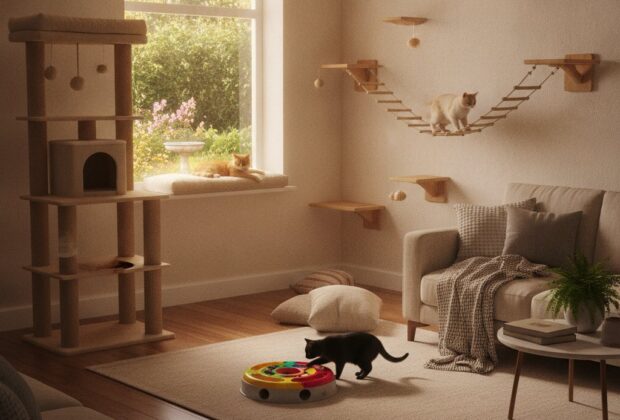
Keeping a cat indoors is one of the best decisions you can make for their safety and longevity, as we explored in Indoor vs. Outdoor Cats: What's Actually Best for Their Health?. Indoor cats avoid the diseases, predators, and traffic accidents that put outdoor cats at risk, a topic covered in depth in The Hidden Dangers of Outdoor Cats. But safety alone isn't enough. Without the right stimulation, indoor cats can become bored, overweight, and prone to stress-related behaviors like excessive grooming, aggression, or destructive scratching. The good news? With a little creativity, you can recreate the mental and physical challenges of the outdoors right inside your home.
Why Indoor Cats Need Extra Enrichment
In the wild, cats spend hours a day hunting, climbing, exploring, and marking territory. An indoor cat with no outlet for these instincts can quickly become understimulated. This often shows up as:
- Obesity from inactivity and free-feeding
- Boredom-driven behaviors like knocking items off shelves or over-grooming
- Litter box issues triggered by stress or lack of stimulation
- Aggression toward other pets or people due to pent-up energy
Enrichment isn't a luxury—it's a core part of responsible indoor cat care.
Puzzle Feeders: Turning Mealtime into Mental Exercise
Swapping a standard food bowl for a puzzle feeder taps into your cat's natural foraging instinct. These devices require cats to bat, roll, or paw at compartments to release kibble, slowing down fast eaters and providing mental stimulation. Start with simple designs and gradually increase difficulty as your cat masters them. For multi-cat households, use separate feeders to prevent food guarding and ensure each cat gets appropriate mental engagement.
Vertical Space: Let Them Climb
Cats feel safer and more confident when they can survey their territory from above. Cat trees, wall-mounted shelves, and floating perches give your cat vertical real estate to climb, perch, and observe. In apartments where floor space is limited, vertical enrichment is especially valuable—it lets you multiply usable cat space without taking up square footage. Position perches near windows for an added bonus.
Window Perches: A Window to the World
A comfortable perch near a window lets your cat watch birds, passersby, and the outdoors—essentially free, self-directed entertainment known as "cat TV." Choose spots with a stable view (avoid areas with excessive traffic noise or midday sun that could overheat the space) and rotate perch locations occasionally to keep things interesting.
Scheduled Play Sessions
Interactive play mimics the stalk-chase-pounce-kill sequence cats crave. Two 10-15 minute sessions a day using wand toys, feather teasers, or laser pointers (followed by a physical toy to "catch" so they get a satisfying end to the hunt) can dramatically reduce boredom-driven behaviors. Consistency matters more than duration—try to play at the same times each day, ideally before meals, to align with your cat's natural hunt-then-eat rhythm.
Catios: A Safe Taste of the Outdoors
A catio (cat patio) is an enclosed outdoor structure that lets your cat experience fresh air, sunlight, and natural sights and smells without the risks of free-roaming. Catios can range from simple window-mounted boxes to elaborate multi-level enclosures connected to the house via a cat door. When building one, prioritize:
- Secure mesh or wire that prevents escape and keeps predators out
- Weather protection such as a partial roof or shaded area
- Enrichment features like shelves, hammocks, and scratching posts inside the enclosure
Even a small catio attached to a window can provide meaningful sensory enrichment.
Leash Walking: Supervised Outdoor Time
Some cats can be trained to walk on a harness and leash, offering supervised outdoor exploration. Start indoors by letting your cat get used to wearing the harness before attempting a walk. Choose quiet, low-traffic areas and always keep sessions short at first. Leash walking isn't for every cat—some will resist the harness entirely—but for curious, confident cats, it can be a wonderful supplement to indoor enrichment.
Enrichment Tips for Multi-Cat Households
When multiple cats share a home, resources need to be multiplied to prevent competition and stress. Follow the general rule of one resource per cat, plus one extra:
- Multiple feeding stations and puzzle feeders
- Several litter boxes placed in different locations
- Enough vertical space and perches for each cat to have their own spot
- Separate play sessions if one cat is more dominant or high-energy
This reduces resource guarding and ensures every cat gets adequate mental and physical stimulation.
Making It Work in a Small Apartment
Limited square footage doesn't mean limited enrichment. Focus on vertical solutions, rotate toys weekly to maintain novelty, and use door-mounted or wall-mounted accessories that don't take up floor space. Even a single well-placed window perch combined with daily play sessions can make a meaningful difference in a small apartment cat's quality of life.
The Bottom Line
Choosing to keep your cat indoors is a health-conscious decision, but it comes with a responsibility to fill the stimulation gap that the outdoors would otherwise provide. Through puzzle feeders, vertical space, window perches, structured play, catios, and even leash walking, you can give your indoor cat a rich, engaging life—free from the dangers of the outdoors but full of the mental and physical challenges they need to thrive.