
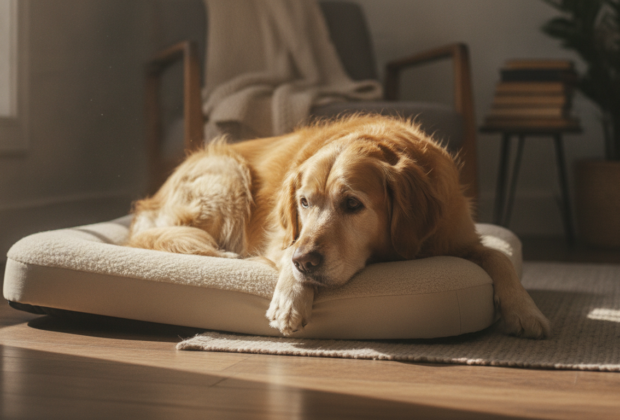
Chronic pain in dogs rarely announces itself with a yelp or a limp. Instead, it creeps in slowly, disguised as personality quirks or "just getting older." As we explored in our complete guide to signs your dog may be in pain, many owners miss these cues simply because they develop over weeks or months rather than appearing suddenly. This article focuses specifically on the behavioral shifts that signal ongoing, chronic discomfort, and how to tell them apart from normal aging.
Why Chronic Pain Hides in Plain Sight
Dogs are hardwired to mask pain. In the wild, showing weakness makes an animal vulnerable to predators or losing status within a pack. This survival instinct persists in our domesticated companions, meaning your dog may continue eating, walking, and greeting you at the door while quietly suffering underneath. Chronic pain conditions like arthritis, dental disease, or intervertebral disc issues often produce behavioral changes long before any physical symptom becomes obvious.
Increased Irritability and Reduced Patience
A dog that once tolerated toddlers climbing on him or other dogs sniffing his ears may suddenly snap, growl, or walk away. This shift is one of the most commonly reported behavioral signs of chronic pain in dogs, yet it's frequently misread as "getting grumpy in old age" or a training regression. Pain lowers a dog's threshold for stress, so situations that were previously harmless now feel threatening or uncomfortable.
Watch for irritability that appears in specific contexts, such as when a particular body area is touched, when getting up from a resting position, or during specific movements like climbing stairs. This pattern-based irritability is a strong clue that something physical is driving the behavior.
Withdrawal From Social Interaction
Dogs experiencing chronic pain often begin avoiding interactions they once sought out. This might look like skipping the usual greeting at the door, choosing to rest in another room instead of joining the family on the couch, or showing less interest in visitors. Because this withdrawal happens gradually, it's easy to attribute it to a dog simply becoming "more independent" with age rather than recognizing it as a red flag.
Real-World Example
Consider a seven-year-old Labrador who used to greet every guest enthusiastically. Over several months, he starts staying in his bed during visits, only approaching for a quick sniff before retreating. His owner initially chalks this up to him "settling down," but a veterinary exam later reveals early hip osteoarthritis. The social withdrawal was his way of avoiding movements that caused discomfort.
Changes in Play Habits
Play is one of the clearest windows into a dog's physical comfort. Chronic pain often shows up as shorter play sessions, reluctance to jump or chase, or a shift from high-energy games like fetch to calmer activities like tug-of-war performed while lying down. Some dogs stop initiating play altogether, waiting for their owner to start every session instead of bringing the toy over themselves.
It's important to distinguish this from a simple decrease in energy that comes with normal aging. Pain-driven play changes tend to be inconsistent and situational, worsening after specific activities like long walks or cold weather, whereas age-related energy decline is typically more gradual and uniform across contexts.
Altered Sleeping Patterns
Chronic discomfort frequently disrupts sleep quality, even if total sleep time increases. You might notice your dog repositioning frequently before settling, choosing new sleeping spots (often softer surfaces or cooler floors), or waking up stiff and needing longer to "warm up" before moving normally. Some dogs also sleep more overall as a coping mechanism, using rest to manage pain rather than because they're simply tired.
Reduced Tolerance for Handling
A dog that once enjoyed being brushed, hugged, or having his paws touched may begin flinching, pulling away, or showing whale eye (the whites of the eyes becoming visible) during grooming or petting. This reduced tolerance for handling is often localized to specific areas of the body, such as the hips, spine, or joints, and can be a key diagnostic clue. For a deeper look at recognizing these physical cues in real time, see our guide on reading your dog's body language for hidden signs of pain.
Normal Aging vs. Pain-Driven Behavior: A Comparison
| Behavior | Normal Aging | Chronic Pain Indicator |
|---|---|---|
| Activity level | Gradual, consistent decline over years | Sudden or fluctuating drops, worse after specific activities |
| Social interaction | Slightly less enthusiastic but still engaged | Active avoidance or hiding from contact |
| Handling tolerance | Stable, minor preference changes | Flinching, growling, or snapping at specific touch points |
| Sleep quality | More naps, easy to settle | Restlessness, frequent repositioning, stiffness on waking |
| Play behavior | Shorter sessions but consistent enthusiasm | Reluctance to initiate, avoidance of specific movements |
Tracking Patterns With a Symptom Journal
Because chronic pain behaviors are subtle and inconsistent, a symptom journal is one of the most valuable tools an owner can use. Each day, jot down brief notes on:
- Activity level and any hesitation during walks or stairs
- Mood and reactions to handling or social situations
- Sleep quality, including restlessness or repositioning
- Appetite and any changes in eating posture
- Weather conditions, since many chronic pain issues worsen in cold or damp weather
Over two to four weeks, patterns often emerge that are invisible on a day-to-day basis but become clear in aggregate. This record is also incredibly useful for your veterinarian, turning vague impressions like "he seems off lately" into concrete, dated observations that can guide diagnosis and treatment.
When to Seek Veterinary Guidance
If you notice two or more of these behavioral shifts persisting for more than two weeks, it's time to schedule a veterinary evaluation. Chronic pain is manageable with the right combination of medication, physical therapy, weight management, and environmental adjustments, but early identification makes a significant difference in your dog's quality of life. Trust your instincts: if something feels different about your dog's personality or habits, it's worth investigating rather than dismissing as "just old age."