
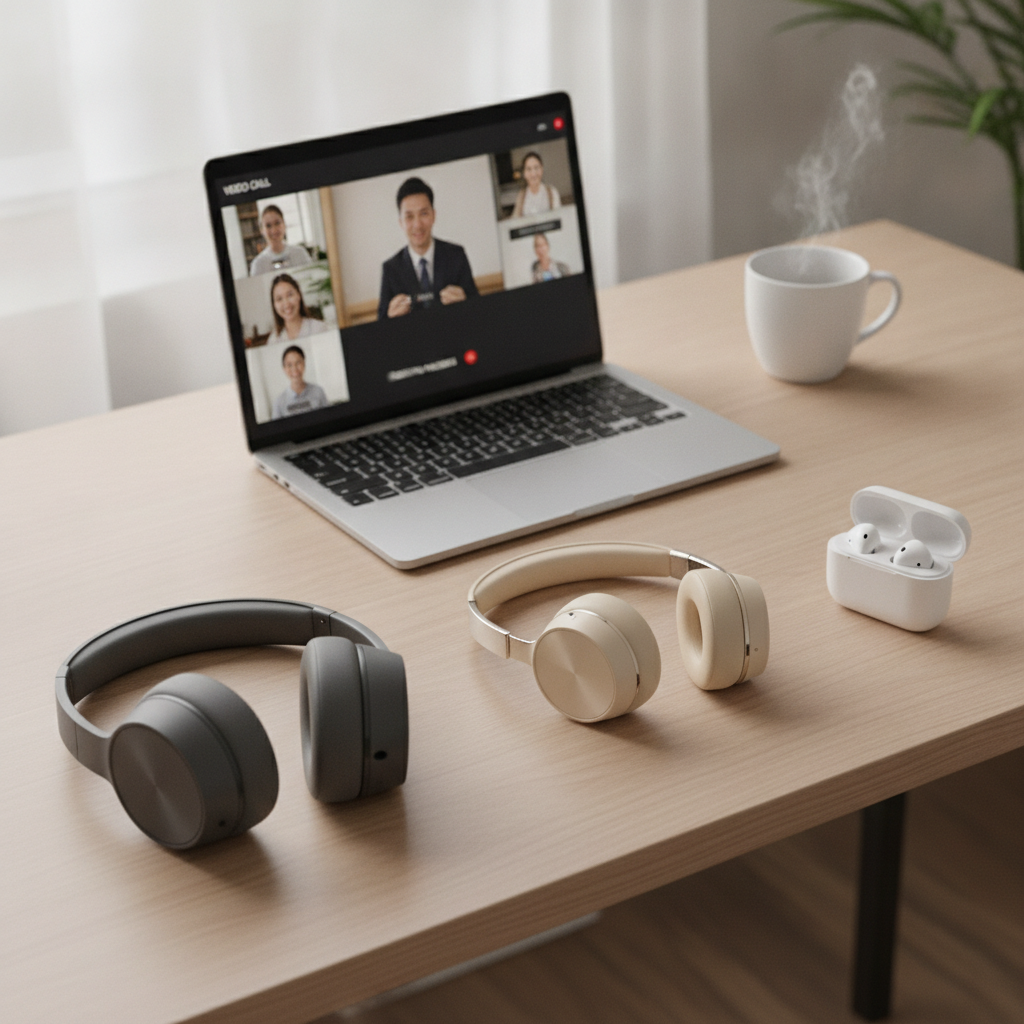
If your calendar is a wall-to-wall stack of video calls, the headphone style you choose matters just as much as the noise-cancelling chip inside it. Comfort, microphone clarity, and how a device handles heat and pressure over eight straight hours can make or break your workday. This guide breaks down over-ear, on-ear, and true wireless earbuds specifically through the lens of long video-conferencing sessions, so you can pick the format that actually fits your desk setup, hairstyle, and how often you get up to walk around.
For a broader look at ANC technology, battery life, and top picks across price points, see our complete buying guide to the best noise-cancelling headphones for remote work in 2026. If budget is your main constraint, our roundup of the best budget noise-cancelling headphones under $100 covers affordable options in every style discussed below.
Why Form Factor Matters More Than Spec Sheets for Video Calls
Marketing copy loves to tout ANC decibel reduction and driver size, but for all-day video calls, the real differentiators are physical: does it clamp your head after hour three, does your microphone pick up your voice clearly without sounding tinny, and does your ear canal or ear cup turn into a sweaty, pressurized mess by lunchtime. These are form-factor problems first and technology problems second.
Over-Ear Headphones: The Comfort Champion (With Caveats)
Over-ear headphones remain the gold standard for extended wear because they distribute clamping force across a wider area of your head and don't touch your ear canal directly. Well-designed models like the Sony WH-1000XM6, Bose QuietComfort Ultra, and Apple AirPods Max spread weight evenly and use memory-foam ear cushions that reduce hot spots during long sessions.
Comfort Over Eight Hours
The biggest risk with over-ear headphones isn't discomfort at hour one — it's cumulative fatigue by hour six or seven. Look for models with breathable mesh or perforated protein-leather cushions rather than solid pleather, which traps heat and moisture. If you wear glasses, pay close attention to clamping force; thick frame arms combined with tight headband tension is the number one complaint among glasses-wearers using over-ear ANC headphones for full workdays.
Microphone Clarity
Over-ear models generally house larger microphone arrays with more room for beamforming algorithms, which is why flagship over-ear headphones from Sony, Bose, and Sennheiser consistently outperform earbuds in call clarity tests, especially in noisy home environments with barking dogs, HVAC systems, or roommates.
Heat and Pressure Buildup
This is the Achilles' heel of the category. Ear cups create a sealed microclimate against your skin, and after several hours that warmth becomes noticeable, particularly in warmer climates or homes without air conditioning. If you run hot, prioritize models explicitly marketed with cooling-gel cushions or vented cup designs.
On-Ear Headphones: The Middle Ground Nobody Talks About
On-ear headphones are often overlooked in 2026 buying guides, but they deserve consideration for a specific type of remote worker: someone who wants more breathability than over-ear cups but doesn't want anything inside their ear canal. Models like the Bose QuietComfort SE On-Ear strike a reasonable balance.
Comfort Over Eight Hours
On-ear headphones rest directly on the ear rather than surrounding it, which means less heat trapping but more direct pressure on ear cartilage. For most people, this becomes noticeable well before the eight-hour mark, making on-ear the least forgiving style for true all-day wear. They work better for people who take frequent headset-off breaks between meetings rather than staying tethered continuously.
Microphone Clarity
Microphone performance on modern on-ear ANC headphones is generally comparable to over-ear models since they often share the same internal platforms from manufacturers, so you're not necessarily sacrificing call quality by choosing this smaller footprint.
Heat and Pressure Buildup
Less heat than over-ear, but more concentrated pressure. If you have sensitive ears or wear glasses with thick arms, the direct contact point of on-ear cushions against your glasses stems can become genuinely uncomfortable during back-to-back calls.
True Wireless Earbuds: Maximum Mobility, Mixed Comfort
Earbuds like the Sony WF-1000XM5, Bose QuietComfort Ultra Earbuds, and Apple AirPods Pro have closed much of the ANC gap with over-ear models while offering total freedom of movement — ideal if your workday includes standing desks, walking meetings, or moving between rooms.
Comfort Over Eight Hours
Comfort is highly individual here. Some people can wear silicone or foam tips all day without issue; others develop ear canal fatigue or soreness after just a few hours. Unlike headphones, earbuds don't interact with glasses or hairstyles at all, which is a meaningful advantage for anyone with thick frames, large hair, or braids that make headband-style devices uncomfortable.
Microphone Clarity
This remains the biggest weakness of the category for video calls. Even flagship earbuds struggle in windy or echo-prone rooms compared to over-ear headphones, since their microphones sit farther from your mouth and rely more heavily on AI noise suppression, which can introduce a slightly processed or robotic quality to your voice on calls.
Heat and Pressure Buildup
Earbuds avoid the sweaty-ear-cup problem entirely, but ear canal pressure from ANC can cause a distinct